
Ferris Wheels for Sale & Hire—Safe, Iconic, Profitable?
49M Ferris Wheel: urban icon, engineering project, reliable crowd-pleaser
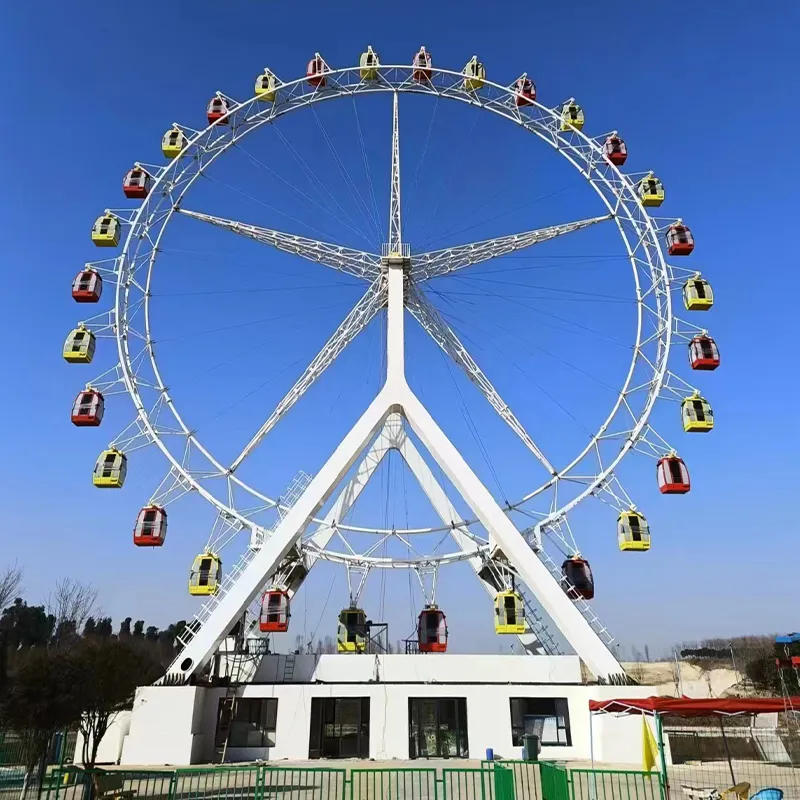
Cities keep reinventing themselves, and—funny enough—what keeps coming back is ferris wheels. To be honest, few attractions do placemaking as efficiently: you get skyline drama, steady throughput, and a family-safe experience even on a Tuesday afternoon. The 49M Ferris Wheel from Hebei (manufactured at No.2969 Xiangdu South Road, Xiangdu District, Xingtai City) is a good snapshot of where the market is right now—LED-forward, energy-aware, and built for 25 years of service.
What’s trending (and why it matters)
Operators want Instagram-visible landmarks that also pencil out. Current trends: low-maintenance drives, smart lighting choreographies, quieter gearboxes, and cabins with real HVAC (not just fans). Many customers say the differentiator now is comfort during shoulder seasons—air-conditioned gondolas extend operating hours and months, which is a big revenue nudge. In fact, mid-size ferris wheels (40–60 m) balance CAPEX and skyline impact better than mega-wheels in many city centers.
Core specs: 49M Ferris Wheel (Class B, observation ride)
| Total height | 49.8 m | Rotary diameter | 45.7 m |
| Operating height | 48 m | Cabs / capacity | 30 cabs, 4 persons per cab |
| Speed | ≈10 mpr (as specified; real-world ops vary) | Drive power | 24 kW |
| AC power (cabins) | 2 kW × 30 = 60 kW | Installed capacity | 122 kVA |
| Power supply | 3N+PE 380/220V, 50 Hz | Usage | Fixed |
| Design life | 25 years | Footprint | Projection 48×16 m²; base 24×16 m² |
| Equipment level | Class B | Type | Observation vehicle |
Manufacturing and validation (how it’s built)
I’ve walked a few wheel shops; the better ones follow a predictable but important chain: materials → fabrication → protective systems → assembly → test.
- Materials: typically Q345B/ASTM A572 structural steel; cabin frames in aluminum; fasteners 8.8/10.9 grade.
- Welding and machining: per AWS D1.1 / EN ISO 5817; qualified welders (EN ISO 9606-1). Critical seams NDT (UT/MT).
- Protection: hot-dip galvanizing (ISO 1461) plus multilayer paint (ISO 12944 C4–C5 regions).
- Electrical: IEC/GB compliant panels; VFD drives; EMC checks. Power balancing given 60 kW of cabin HVAC.
- Testing: proof load ≈1.25× rated; geometry/balance checks; run-in 72–100 h; vibration within ISO 10816 guidance; acceptance to EN 13814/GB 8408; optional third-party witness (TÜV/BV/SGS).
Service life is 25 years with scheduled inspections—daily visual, monthly torque/grease, annual NDT on key joints. Wind ops limits are site-specific under the standard; operators often adopt conservative thresholds, which, frankly, is wise.
Use cases and advantages
Where it shines: waterfront promenades, downtown plazas, resort gateways, and mall rooftops (where structure allows). Advantages include predictable flow (≈120 riders per cycle), strong sponsorship visibility, and, surprisingly, quieter operation than older ferris wheels thanks to modern drives.
Customization
Cabin themes and RAL colors, LED show packages, air-conditioning (2 kW per cabin is standard here), glass tinting, audio/PA, accessibility-friendly loading, and POS/ticketing integration. Branding wraps are common; real-world use may vary with local codes.
Vendor snapshot (comparative, indicative)
| Vendor | Standards/Certs | Customization | Lead time | Warranty | Notes |
|---|---|---|---|---|---|
| Hebei manufacturer (49M model) | EN 13814, GB 8408; ISO 9001 (typ.); CE where applicable | High (LED, HVAC, branding) | ≈5–8 months | 12–24 months (parts) | Balanced CAPEX; solid HVAC capacity |
| EU maker (mid-size) | EN 13814; CE; ISO 3834 welding | Medium–High | ≈8–12 months | 24 months+ | Premium finishes; higher CAPEX |
| Regional assembler | ASTM F2291/Local codes | Medium | ≈6–10 months | 12 months | Faster site support; spec variability |
Mini case notes
A waterfront installation in Southeast Asia reported higher evening dwell thanks to LED shows and chilled cabins; a mall rooftop in the Middle East used sponsorship wraps to cover 40% of OPEX. Anecdotal? Sure—but consistent with what I hear when ferris wheels are part of a broader placemaking plan.
Compliance and documentation
Expect a technical file with structural calcs/FEA, material certs (mill test reports), welding logs, NDT records, FAT/SAT checklists, and O&M manuals. Third-party inspection and operator training are strongly recommended.
Authoritative citations
- EN 13814:2019 Safety of amusement rides and amusement devices (Parts 1–3)
- ASTM F2291-23 Standard Practice for Design of Amusement Rides and Devices
- GB 8408-2018 Large-Scale Amusement Device Safety Code (China)
- IAAPA Operations and Maintenance Best Practices, latest edition
-
Ethiopian governmentApr.12,2024
-
On March 20-22Apr.12,2024
-
Comprehensive Guide to Choosing the Perfect sightseeing wheelApr.16,2026
-
Guide to Choosing a Roller Coaster and Ferris Wheel for Your ParkApr.09,2026
-
Find Your Perfect Portable Ferris Wheel for Sale and Elevate EntertainmentApr.07,2026
-
The Captivating World of Portable Ferris Wheels and Event EntertainmentApr.04,2026