
Roller Coaster Classifications: Which Type Maximizes ROI?
A Field Guide to Roller Coaster Classifications, With Real-World Specs and Buying Notes
If you spend enough time walking parks and reading maintenance logs (guilty), you realize roller coaster classifications aren’t just labels for fans—they’re a purchasing framework. Steel vs. wooden, launched vs. chain lift, sit-down vs. inverted, family vs. thrill, and then the height/length tiers (hyper, giga, etc.). In practice, parks mix these types to balance throughput, marketing sizzle, and maintenance realism.
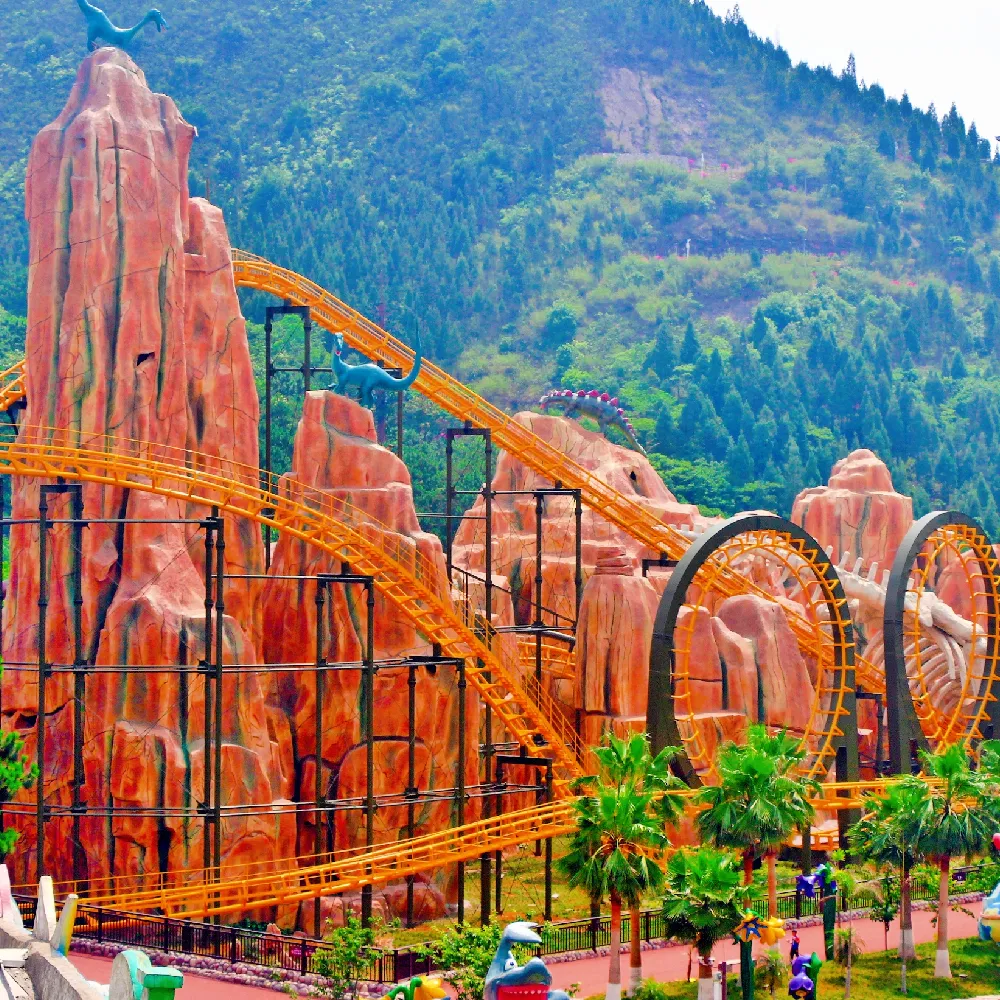
Industry snapshot
Right now we’re seeing compact multi-inversion steel coasters gaining traction in regional parks. Why? Smaller footprints, lower power draw, and higher “wow” factors per square meter. As for roller coaster classifications, the lines blur: a mid-tier looping steel model can be a signature coaster if it’s photogenic and rides smooth.
Product spotlight: Four Loops Roller Coaster
Built in Hebei Province (No.2969 Xiangdu South Road, Xiangdu District, Xingtai City), this steel sit-down, chain-lift, multi-inversion model sits neatly in the “thrill” class of roller coaster classifications. It’s surprisingly flexible for mid-size parks that want inversion count without mega-coaster budgets.
| Track length | 480 m | Max height | 25.2 m |
| Top speed | ≈ 69 km/h | Ride time | ≈ 100 s |
| Train/cabin qty | 4 cabins | Passengers | 16 per dispatch |
| Total power | ≈ 90 kW | Site area | 90 m × 40 m |
Materials, methods, testing
Track/columns: welded tubular steel (low-alloy structural), hot-dip galvanized base plates, powder-coat topcoat. Welds qualified per ISO 9606; inspection with UT per ISO 17640 and magnetic particle testing (ASTM E1444/E1444M). Structural design references EN 13814:2019 and ASTM F2291—yes, the usual heavy hitters. Fatigue analysis targets ≥10^6 cycles on critical joints. Typical service life: 15–25 years with mid-life repaint and bearing replacement.
Sample test data (commissioning): lateral accel peak ≈ 1.2 g, vertical positive ≈ 3.8–4.2 g, A-weighted pass-by noise ≈ 80–85 dBA at 10 m, vibration at gearbox housings ≈ 2.5–4.0 mm/s RMS. Honestly, results depend on wind and track temperature.
Application scenarios
- Regional parks seeking an inversion headliner without giga-scale CAPEX.
- Tourist-zone parks with strict footprints; the 90×40 m pad is friendly.
- Resort add-ons where maintenance teams already service chain-lift stock.
Advantages and customization
Advantages: compact footprint, marketable four-inversion profile, sensible power draw, and predictable ops. Customization: colorways, lap-bar vs. OTSR configurations (subject to profiling), thematic cladding, queue integration, and station fit-outs. Throughput tuning via dual-dispatch procedures and transfer-track spares, depending on budget.
| Vendor | Core type | Lead time | Customization | Certs |
|---|---|---|---|---|
| ZP Four Loops (Hebei) | Steel, 4 inversions | ≈ 7–10 months | High (colors, restraints, theming) | ISO 9001; EN 13814-ready |
| EU specialist (comparable) | Steel multi-loop | ≈ 10–14 months | Medium–High | EN 13814, ISO 3834 |
| NA builder (comparable) | Steel loop/launch variants | ≈ 12–16 months | Medium | ASTM F2291/F1193 |
Process flow (from bid to ribbon-cutting)
- Concept & classification fit: align with roller coaster classifications and park mix.
- Structural/profiling: finite element checks, clearance envelopes, evac planning.
- Fabrication: coded welders; NDT; paint systems tested per ISO 12944 (C3–C4).
- Factory acceptance: drive system load tests; controls to ISO 13849 Cat. 3/PL d.
- Site works: foundations, vertical build, alignment, torque audits.
- Commissioning: empty and loaded runs, G-record validation, ops training.
Case study and feedback
A coastal park in Southeast Asia replaced a dated corkscrew with Four Loops. Reported uptime averaged 98.6% over peak season; dispatch every ≈70–90 s after staff drilled procedures. “Guests call it ‘intense but repeatable,’” the ops lead told me—exactly where you want a mid-tier invert-ish feel without going nuclear on g-forces.
Certifications available on request: ISO 9001 QA, material certs (EN 10204 3.1), design documentation mapping to EN 13814:2019 / ASTM F2291, and QA manuals per ASTM F1193. Local authority approvals will vary—always check jurisdictional requirements.
Authoritative citations
- EN 13814:2019 — Safety of amusement rides and amusement devices.
- ASTM F2291 — Standard Practice for Design of Amusement Rides and Devices.
- ASTM F1193 — Quality, Manufacture, and Construction of Amusement Rides and Devices.
- ISO 13849 — Safety of machinery — Safety-related parts of control systems.
- ISO 17640 — Non-destructive testing of welds — Ultrasonic testing.
- ASTM E1444/E1444M — Standard Practice for Magnetic Particle Testing.
- ISO 12944 — Paints and varnishes — Corrosion protection of steel structures.
-
Ethiopian governmentApr.12,2024
-
On March 20-22Apr.12,2024
-
Comprehensive Guide to Choosing the Perfect sightseeing wheelApr.16,2026
-
Guide to Choosing a Roller Coaster and Ferris Wheel for Your ParkApr.09,2026
-
Find Your Perfect Portable Ferris Wheel for Sale and Elevate EntertainmentApr.07,2026
-
The Captivating World of Portable Ferris Wheels and Event EntertainmentApr.04,2026