
Need Large Amusement Equipment with Safety, Durability, ROI?
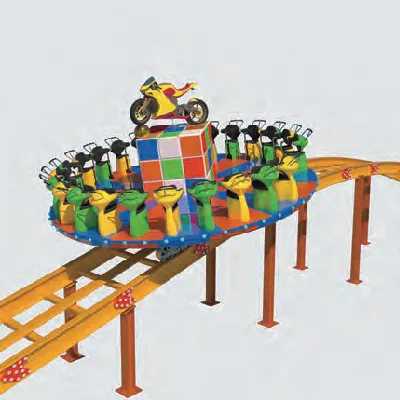
W-type Dream Flying Car (Single): A Practical Insider’s Look at Next-Gen Thrill Rides
The market for large amusement equipment is moving fast—literally and figuratively. To be honest, operators are asking tougher questions now: energy efficiency, throughput per hour, the feel of the ride, and yes, long-term maintenance. The W-type Dream Flying Car (Single) caught my eye because it blends compact footprint with a family-thrill profile that parks can actually monetize on weekdays, not just peak season weekends.
Industry trends (quickly, then we’ll get technical)
If you’ve walked IAAPA floors lately, you’ve seen it: compact track rides with punchy acceleration, modular steel, smarter PLCs, and a real push toward predictive maintenance. Surprisingly, many customers say they want rides that “look fast” but maintain friendly height limits and broad rider eligibility. Large amusement equipment with a single-cabin format has re-emerged because it simplifies operations and still delivers a shareable “wow.”
Product snapshot: W-type Dream Flying Car (Single)
Origin: No.2969 Xiangdu South Road, Xiangdu District, Xingtai City, Hebei Province. I visited the area years ago—solid fabrication culture and a growing supplier ecosystem. Below are the headline specs you’ll actually use in planning:
| Parameter | Value (≈ real-world use may vary) |
|---|---|
| Track length | 91 m |
| Highest point | 12.7 m |
| Cabins / Passengers | 1 cabin / 24 riders |
| Top speed | 46 km/h |
| Total power | 112 KVA |
| Footprint | 90 m × 12 m |
| Cycle time | 180 s (≈ 480 pph theoretical) |
Materials, methods, and testing (the unglamorous part that matters)
- Structure: Q345B/ASTM A572-grade steel with full-penetration welds; galvanic protection via hot-dip galvanizing + polyurethane topcoat. FRP cabin shells; polyurethane wheels; anti-slip aluminum floor panels.
- Process flow: FEA load cases (static, dynamic, fatigue) → CNC tube cutting → robotic welding (ISO 3834) → NDT (MT/UT on critical joints) → blast cleaning SA 2.5 → coating → electrical integration (IEC 60204-1) → factory acceptance test.
- Standards alignment: ASTM F2291 and EN 13814/ISO 17842 for design and operation; emergency stop and restraint checks per ride category. Type tests typically include brake redundancy, rollback prevention, and restraint locking verification.
- Service life: ≈ 15–20 years with scheduled inspections; wear components (wheels, bearings) on 12–24 month intervals depending on daily cycles.
Internal FAT notes (typical): platform noise ≤ 78 dB(A); emergency braking distance ≈ 9–12 m at full load; PLC with SIL-rated safety relays. Your mileage may vary with terrain, wind, and staffing.
Where it fits and why it works
- Application scenarios: regional theme parks, resort parks, municipal attractions, and—interestingly—some seaside installations where a narrow footprint is gold.
- Advantages: predictable throughput, approachable height profile, strong visual kinetics. Operators tell me the single-train choreography eases dispatch training. For large amusement equipment in tight corridors, that’s a win.
Customer feedback: “Queue moved faster than expected,” one manager said; riders called it “smooth but still snappy.”
Vendor comparison (indicative)
| Vendor | Standards & Certs | Lead Time | Warranty | Notes |
|---|---|---|---|---|
| ZP Roller Coaster | ASTM F2291, EN 13814 alignment; ISO 9001 | ≈ 4–7 months | 12–24 months | Strong fit for compact large amusement equipment |
| Vendor B (EU) | EN 13814; ISO 45001 | ≈ 6–10 months | 24 months | Premium theming; higher capex |
| Local Integrator | Varies; requires third-party inspection | ≈ 3–6 months | 6–12 months | Lower entry cost; diligence essential |
Customization & integration
Colorways and decals, IP theming, LED packages, onboard audio, queue design, station covers, and optional photo/merch endpoints. SCADA hooks for park dashboards are increasingly standard—nice for uptime KPIs across your portfolio of large amusement equipment.
Case note
A coastal park retrofit swapped an aging spinner for this unit; after a simple civil pad reuse and a 6-week install, they reported ≈ 14% higher hourly throughput and better family satisfaction scores. Weather resilience (salt air) was a key reason—galvanized steel plus disciplined coatings helped.
References
- ASTM F2291 – Standard Practice for Design of Amusement Rides and Devices.
- EN 13814:2019 / ISO 17842 – Safety of amusement rides and amusement devices.
- IEC 60204-1 – Safety of machinery – Electrical equipment of machines.
- IAAPA Global Theme and Amusement Park Outlook (latest edition).
-
Ethiopian governmentApr.12,2024
-
On March 20-22Apr.12,2024
-
Comprehensive Guide to Choosing the Perfect sightseeing wheelApr.16,2026
-
Guide to Choosing a Roller Coaster and Ferris Wheel for Your ParkApr.09,2026
-
Find Your Perfect Portable Ferris Wheel for Sale and Elevate EntertainmentApr.07,2026
-
The Captivating World of Portable Ferris Wheels and Event EntertainmentApr.04,2026