
Thrilling Roller Coasters Design & Custom Builds for Sale.
Strategic Approaches to Advanced Roller Coaster Design and Implementation
In the dynamic world of amusement and entertainment, the strategic approach to roller coasters design is paramount for creating compelling, safe, and profitable attractions. Modern theme parks and entertainment venues require sophisticated engineering, rigorous safety protocols, and innovative concepts to captivate audiences and ensure sustained operational excellence. This comprehensive overview delves into the intricate facets of designing, manufacturing, and deploying high-performance roller coasters, with a particular focus on the advanced capabilities of Suspended Roller Coasters.
The demand for thrilling and immersive experiences drives continuous innovation in ride technology. From initial conceptualization to final commissioning, every stage of a roller coaster project demands a blend of artistic vision and engineering precision. Understanding the underlying technical specifications, manufacturing processes, and operational advantages is crucial for B2B decision-makers considering to acquire or upgrade their attractions, whether they seek to buy a roller coaster for a sprawling theme park or explore options like a small roller coaster for sale for a family entertainment center.
Current Industry Trends and Market Demands
The amusement ride industry is currently witnessing several transformative trends that influence roller coasters design. Key among these is the increasing emphasis on immersive storytelling, enabled by advanced multimedia integration, virtual reality (VR) overlays, and sophisticated thematic elements. Parks are investing in rides that offer not just physical thrills but also narrative depth, creating truly memorable guest experiences.
Another significant trend is the pursuit of higher efficiency and sustainability. Operators are looking for rides that offer high throughput (riders per hour) to minimize queue times, coupled with reduced energy consumption and maintenance requirements. This includes the adoption of energy-efficient drive systems, regenerative braking, and materials with extended service life and lower environmental impact. Furthermore, there's a growing market for specialized installations, such as a mountain coaster for sale, which leverages natural terrain to offer unique experiences, and dedicated sections for children, which often include a kiddie roller coaster for sale. The overall roller coaster cost varies significantly based on complexity, size, and customization, making early planning crucial for budgeting and ROI calculations.
Safety remains the paramount concern, driving continuous innovation in ride control systems, restraint designs, and material science. Rigorous adherence to international safety standards, such as ASTM F2291, EN 13814, and ISO 17842, is non-negotiable for all reputable manufacturers of amusement park roller coasters for sale. The integration of advanced diagnostics and predictive maintenance technologies also contributes to enhanced operational safety and reliability.
Technical Specifications of Suspended Roller Coasters
Suspended Roller Coasters, where trains hang below the track, offer a unique ride experience characterized by open-air sensations and exhilarating swinging motions. The design principles involve intricate calculations of load distribution, dynamic forces, and material stress to ensure both safety and a thrilling experience.
| Parameter | Typical Range/Value | Engineering Relevance |
|---|---|---|
| Track Length | 500m - 1200m+ | Influences ride duration and overall excitement profile. |
| Height | 20m - 50m+ | Determines potential energy and visual impact. |
| Max Speed | 60 km/h - 100 km/h | Directly impacts g-forces and thrill level. |
| Capacity (PPH) | 800 - 1500 riders/hour | Critical for park operations and managing guest flow. |
| Max G-forces (Vertical) | +4.5g to -1.0g | Designed within human tolerance for safety and comfort. |
| Track Material | High-strength structural steel alloy (e.g., S355JR, A500) | Ensures structural integrity, fatigue resistance, and longevity. |
| Restraint System | Over-the-Shoulder Restraints (OTSRs) with redundant locking mechanisms | Primary safety feature for rider containment. |
| Service Life | 25-30+ years (with proper maintenance) | Key for long-term investment planning and operational budget. |
The robust nature of these specifications underpins the reliability and safety of modern roller coasters. Each component, from the track sections to the wheel assemblies and braking systems, is engineered to withstand extreme forces and provide consistent performance over decades of operation.
The Advanced Manufacturing Process of Roller Coasters
The creation of a high-performance roller coaster is a multi-stage manufacturing process that demands precision engineering and stringent quality control. The process begins long before any metal is cut, emphasizing detailed roller coasters design and simulation.
- Conceptualization & Design Phase: This involves ride layout, theme integration, dynamic simulations (e.g., using CAD/CAE software like SolidWorks, AutoCAD, ANSYS for stress analysis), and virtual prototyping. Engineers optimize ride parameters for thrill, safety, and capacity, adhering to standards like ISO 17842 and ASTM F2291.
- Material Sourcing & Preparation: High-grade structural steel alloys are chosen for their strength-to-weight ratio and fatigue resistance. Common materials include European EN S355JR or American ASTM A500 Grade B/C, specified for track and support structures. Wheels utilize specialized polyurethanes or nylon compounds, while seats incorporate durable composites and flame-retardant fabrics. All materials undergo strict incoming quality inspection.
-
Fabrication – Precision Manufacturing:
- Tube Bending & Forming: Steel tubes for tracks are precisely bent to complex three-dimensional curves using advanced CNC tube bending machines, ensuring dimensional accuracy crucial for a smooth ride.
- Welding: Robotic and skilled manual welding techniques are employed to join track sections and support columns. Weld quality is critical and is verified through non-destructive testing (NDT) such as ultrasonic testing, radiographic inspection, and magnetic particle inspection, compliant with standards like AWS D1.1 (Structural Welding Code – Steel).
- CNC Machining: Critical components like wheel axles, brake fin mounts, and connection plates are machined to extremely tight tolerances using CNC milling and turning centers, ensuring perfect fit and function.
- Corrosion Protection: All steel components undergo thorough surface preparation (e.g., sandblasting to SA 2.5 standards) followed by multi-layer industrial coating systems, typically including zinc-rich primers, epoxy intermediates, and UV-resistant polyurethane topcoats, ensuring exceptional corrosion resistance for decades, even in harsh outdoor environments.
- Pre-Assembly & Testing: Major sections are often pre-assembled in the factory to verify fit-up and alignment. Critical safety systems, including braking mechanisms (e.g., magnetic brakes or pneumatic caliper brakes), restraint systems, and control electronics, undergo rigorous functional testing and calibration.
- Quality Control & Certification: Throughout the entire manufacturing process, quality assurance teams monitor every step, from material inspection to final product verification. This includes dimensional checks, material testing, weld inspections, and performance testing. Final documentation and certification according to relevant international standards (e.g., ISO 9001 for quality management, EN 13814 for amusement rides) are provided. The service life of such meticulously manufactured components typically exceeds 25 years with proper maintenance, ensuring a strong return on investment given the significant roller coaster cost.
The meticulous attention to detail at each step of this process is what differentiates leading manufacturers and ensures the unparalleled safety, reliability, and longevity of their rides.
Application Scenarios and Target Markets
The versatility of modern roller coasters design allows for a wide array of application scenarios across various entertainment sectors.
- Major Theme Parks: Large-scale Suspended Roller Coasters are anchor attractions, drawing millions of visitors annually. They are designed for high thrill, complex inversions, and expansive footprints, often integrating seamlessly into thematic zones. For these clients, the focus is on a unique guest experience and high throughput, making `amusement park roller coasters for sale` a significant investment.
- Family Entertainment Centers (FECs) & Smaller Parks: Here, the demand might be for a small roller coaster for sale or a kiddie roller coaster for sale. These rides are designed with a smaller footprint, lower height requirements, and gentler forces to cater to a broader family demographic. Even at this scale, safety and operational efficiency remain critical.
- Resorts and Integrated Entertainment Destinations: High-end resorts often integrate unique attractions to enhance guest stays. A custom-designed roller coaster can serve as a signature experience, differentiating the resort in a competitive market. Considerations here include unique aesthetics, advanced theming, and exceptional guest comfort.
- Specialty Installations: The market also includes unique applications such as the mountain coaster for sale, which utilizes the natural topography for a thrilling downhill experience, or urban entertainment complexes seeking compact, high-impact rides. While a `backyard roller coaster price` is not relevant for commercial-grade products, the principles of custom design can apply to unique private ventures, albeit at a significantly different scale and cost.
In all these scenarios, the primary advantage is the ability to deliver an unparalleled guest experience while ensuring long-term operational viability through robust construction and minimal downtime. Energy-efficient lift hill systems (e.g., chain lift with frequency drives, or linear synchronous motors for high launch speeds) contribute to lower operating costs, while superior corrosion resistance through advanced coating systems significantly reduces maintenance expenditures over the ride's extensive service life.
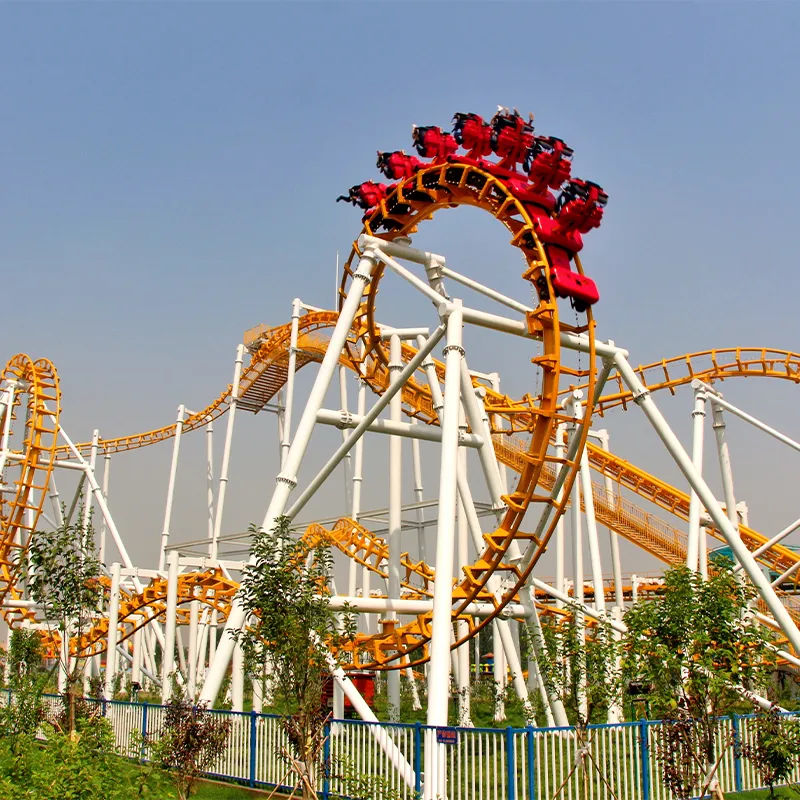
Technical Advantages of Modern Suspended Roller Coasters
Contemporary Suspended Roller Coasters offer a distinct set of technical advantages that contribute to their popularity and operational efficacy:
- Enhanced Thrill Factor and Smoothness: The suspended seating arrangement, often floorless or with open sides, creates a perception of flying and allows for unique visual interaction with the environment below. Precision engineering in roller coasters design and manufacturing results in incredibly smooth transitions and controlled forces, enhancing guest comfort even during high-intensity maneuvers.
- Superior Safety Systems: Redundant braking systems (e.g., primary magnetic brakes, secondary friction brakes), multi-point over-the-shoulder restraints (OTSRs), and sophisticated PLC-based control systems with real-time diagnostics ensure unparalleled safety. These systems are designed with multiple layers of redundancy to prevent failures and ensure safe operation even under unexpected conditions.
- Durability and Longevity: Constructed from high-strength, fatigue-resistant steel alloys and treated with advanced anti-corrosion coatings, these rides are built to withstand decades of heavy use and exposure to diverse environmental conditions. The design considers factors like UV degradation, temperature fluctuations, and moisture, contributing to a service life often exceeding 25 years.
- Operational Efficiency: Advanced control systems optimize train dispatch intervals, minimizing bottlenecks and maximizing throughput. Low-friction wheel assemblies and efficient lift/launch mechanisms reduce energy consumption. Furthermore, modular design facilitates easier maintenance and component replacement, significantly reducing downtime.
- Adaptability and Customization: The flexible nature of track fabrication allows for highly customized layouts that fit specific plot sizes and thematic requirements. This adaptability ensures that each installation can be a unique, signature attraction.
These advantages collectively contribute to a superior return on investment for park operators, combining thrilling guest experiences with reliable and cost-effective operation.
Vendor Comparison and Customized Solutions
When sourcing amusement park roller coasters for sale, thorough vendor comparison is crucial. Key factors to evaluate include:
- Experience and Reputation: Look for manufacturers with a proven track record, extensive portfolio, and positive client testimonials.
- Certifications and Compliance: Verify adherence to international safety and quality standards (e.g., ISO 9001, ASTM, EN).
- Engineering Capabilities: Assess their capacity for innovative roller coasters design, simulation, and custom fabrication.
- After-Sales Support: Evaluate their commitment to installation, training, warranty, and long-term maintenance.
| Feature | Suspended Coaster | Inverted Coaster | Floorless Coaster |
|---|---|---|---|
| Train Position | Below track, free-swinging | Below track, rigid connection | Above track, no floor |
| Ride Sensation | Flying, swinging, highly dynamic | Intense inversions, feet dangle | Open-air, ground rushing by |
| Layout Complexity | Moderate to high, utilizes swinging | High, known for multiple inversions | Moderate, focus on drops and turns |
| Throughput Potential | Good (800-1200 PPH) | High (1000-1500 PPH) | High (1000-1400 PPH) |
| Target Audience | Families, thrill-seekers looking for unique experience | Thrill-seekers, inversion enthusiasts | General thrill-seekers, unique visual experience |
Customized Solutions: A reputable manufacturer offers comprehensive customization. This includes tailored track layouts to fit specific plot dimensions and topography, bespoke theming integration (from station architecture to ride vehicle aesthetics), and variable capacity options (train length, number of trains) to align with anticipated visitor numbers and operational models. For highly specialized requests, such as integrating unique media elements or advanced interactive features, a collaborative approach with the design team is essential. Even for smaller ventures, like a specialized mountain coaster for sale, customization ensures optimal integration with the natural environment and a distinct guest experience.
Application Case Studies: Success in Motion
The successful implementation of expertly engineered roller coasters can transform an entertainment venue. Here are illustrative examples of how meticulous roller coasters design and execution lead to significant guest satisfaction and operational success:
-
Case Study 1: "The Sky Glider" at a Major European Theme Park
A leading European theme park sought to add a signature thrill ride that would cater to a broad family audience while offering a unique 'flying' sensation. A custom-designed Suspended Roller Coaster was chosen, featuring a dynamic layout that interacted closely with existing terrain and water features. The project included bespoke train designs with advanced ergonomic seating and a themed station. Post-installation, the ride consistently achieves over 1,200 riders per hour, has garnered numerous industry awards for its innovative design and guest experience, and significantly boosted park attendance, proving the value of investing in high-quality amusement park roller coasters for sale.
-
Case Study 2: "Jungle Explorer" at an Asian Entertainment Resort
An expansive integrated resort in Asia required a compact yet thrilling attraction to complement its existing offerings. A smaller footprint Suspended Roller Coaster was engineered to navigate a dense, jungle-themed area. The ride's flexible design allowed for tight turns and low-to-the-ground passes, creating an immersive, high-speed journey through the simulated wilderness. Its robust construction and efficient design resulted in exceptional uptime (over 98%) during its first three years of operation, demonstrating that even a small roller coaster for sale can deliver substantial impact when expertly designed. Guest feedback consistently highlights the ride's smooth experience and immersive theming.
These case studies underscore the importance of a holistic approach to ride development, from initial concept to long-term operation, ensuring both immediate guest appeal and sustainable profitability.
Trustworthiness and Support: Our Commitment
Building trust with B2B clients is foundational. Our commitment extends beyond the sale of a product to encompass comprehensive support and transparency.
Frequently Asked Questions (FAQ)
Q: What is the typical lead time for a custom Suspended Roller Coaster?
A: From initial design approval to factory acceptance testing, typical lead times range from 18 to 24 months, depending on the complexity and scale of the project. Installation and commissioning on-site usually add another 4-6 months.
Q: What kind of warranty is provided for the structural components?
A: We offer a standard 2-year warranty on all mechanical and electrical components and a 5-year warranty on structural steel elements against defects in materials and workmanship, in line with industry best practices. Extended warranty options are available.
Q: What post-installation support and maintenance services are available?
A: Our comprehensive after-sales support includes on-site training for your maintenance staff, detailed operational and maintenance manuals, readily available spare parts, and remote technical assistance. We also offer annual inspection contracts and preventative maintenance programs to ensure optimal performance and longevity.
Q: Can you assist with the foundational and civil engineering aspects?
A: While we specialize in ride manufacturing, we provide detailed foundation plans and loads, and can collaborate closely with your civil engineering and construction partners to ensure seamless integration and adherence to all site-specific requirements.
Lead Time & Fulfillment Details
Our project management methodology ensures transparent communication and timely delivery. From contract signing, the typical project timeline involves: detailed design finalization (3-6 months), material procurement and fabrication (8-12 months), factory acceptance testing (1 month), shipping and logistics (1-3 months), and on-site installation and commissioning (4-6 months). Expedited options are available for specific project needs, subject to discussion.
Warranty Commitments
All our amusement rides are designed and manufactured to meet or exceed relevant international safety standards. Our warranty covers material defects and workmanship. Specific warranty periods are detailed in the contractual agreement for each project, reflecting our confidence in the quality and durability of our engineering.
Customer Support & Service
Our dedicated customer support team is available globally, offering comprehensive assistance from initial inquiry through the entire lifecycle of your ride. This includes technical troubleshooting, spare parts ordering, scheduled maintenance, and performance optimization services. We partner with clients to ensure their attractions operate safely and efficiently for decades.
Conclusion: The Future of Thrill Engineering
The intricate art and science of roller coasters design continue to evolve, pushing the boundaries of engineering, safety, and immersive entertainment. For B2B stakeholders, understanding the technical depth, manufacturing rigor, and comprehensive support systems behind these monumental attractions is crucial for making informed investment decisions. Whether you are looking to buy a roller coaster for a major destination or explore a small roller coaster for sale, partnering with an experienced and reputable manufacturer ensures a future of unparalleled thrills and sustained operational success. The commitment to innovation, safety, and client partnership drives the next generation of iconic rides.
Authoritative References
- ASTM F2291. (2020). Standard Practice for Design of Amusement Rides and Devices. ASTM International.
- ISO 17842-1. (2015). Safety of amusement rides and amusement devices – Part 1: Design and manufacture. International Organization for Standardization.
- EN 13814. (2019). Safety of amusement rides and amusement devices. European Committee for Standardization.
- Smith, T. (2012). The History and Engineering of Roller Coasters. Momentum Press.
- Journal of Amusement Ride Engineering. (Ongoing). International Association of Amusement Parks and Attractions (IAAPA).
-
Ethiopian governmentApr.12,2024
-
On March 20-22Apr.12,2024
-
Comprehensive Guide to Choosing the Perfect sightseeing wheelApr.16,2026
-
Guide to Choosing a Roller Coaster and Ferris Wheel for Your ParkApr.09,2026
-
Find Your Perfect Portable Ferris Wheel for Sale and Elevate EntertainmentApr.07,2026
-
The Captivating World of Portable Ferris Wheels and Event EntertainmentApr.04,2026