
Bayside Ferris Wheel: Explore Types & Purchase Options
Understanding the Modern Ferris Wheel Market: Industry Trends
The global amusement ride industry is experiencing robust growth, driven by increasing urbanization, disposable incomes, and the continuous demand for unique leisure experiences. Within this dynamic landscape, the evolution of the ferris wheel, particularly the large-scale observational type, represents a significant engineering and entertainment achievement. Modern ferris wheels are not merely attractions; they are often iconic landmarks, integral to tourism infrastructure and urban development projects. Trends indicate a clear shift towards higher capacities, greater heights, enhanced safety features, and integrated digital experiences. There's also a growing emphasis on energy efficiency, sustainable materials, and modular construction techniques to facilitate faster installation and reduced operational costs. The demand for technologically advanced and visually striking structures like the bayside ferris wheel, capable of offering panoramic views and becoming a focal point for entertainment districts, is consistently on the rise.
Beyond traditional amusement parks, these monumental structures are increasingly being deployed in mixed-use developments, waterfront promenades, and commercial hubs, transforming skylines and drawing significant visitor traffic. Key market drivers include the expansion of tourism infrastructure, particularly in emerging economies, and the continuous innovation in ride design and guest experience. The integration of advanced materials, such as high-strength steel alloys and composite components, allows for lighter yet more robust designs, enhancing both safety and aesthetic appeal. Furthermore, the market for "ferris wheels for sale" is seeing a diversification, catering to bespoke designs, from the grand "china ferris wheel" projects to more specialized "amusement park ferris wheel for sale" options, reflecting varying scales and investment capacities.
Technical Specifications: 66M Truss Ferris Wheel (4-Passenger Cabin)
Precision engineering is paramount in the design and construction of large-scale amusement rides. Our 66M Truss Ferris Wheel, designed with 4-passenger cabins, exemplifies advanced structural integrity and operational efficiency. The truss design offers superior strength-to-weight ratio, optimizing material usage while ensuring maximum safety and stability under various environmental conditions.
| Parameter | Specification | Unit |
|---|---|---|
| Wheel Height | 66 | Meters |
| Cabin Capacity | 4 passengers per cabin | |
| Number of Cabins | 42 | |
| Total Passenger Capacity | 168 | Passengers |
| Rated Speed | 0.25 - 0.35 | m/s |
| Ride Duration (Typical) | 15 - 20 | Minutes |
| Total Installed Power | ~75 | kW |
| Drive System | Electric Motor with Planetary Gearbox | |
| Main Structure Material | High-Strength Structural Steel (Q345B/C) | |
| Safety Standards | EN 13814, ASTM F2291, ISO 17842 | |
| Operational Wind Speed Limit | Up to 20 | m/s |
| Ambient Temperature Range | -20°C to +45°C |
The robust design ensures a service life exceeding 25 years with proper maintenance, making it a sustainable long-term investment. The drive system, featuring an electric motor coupled with a high-efficiency planetary gearbox, minimizes energy consumption while providing smooth, controlled rotation. This contributes significantly to the energy-saving advantages of modern ferris wheels.
The Manufacturing Process: From Concept to Commissioning
The production of a large-scale structure like the bayside ferris wheel involves a meticulously planned and executed process, adhering to stringent quality control protocols. Our manufacturing journey is engineered for precision, durability, and compliance with international standards.
Detailed Process Flow:
- Design & Engineering (FEA & CAD): Initial concept development followed by detailed structural design using Finite Element Analysis (FEA) and Computer-Aided Design (CAD) software. This phase optimizes material usage, predicts stress points, and ensures compliance with global safety standards (e.g., EN 13814, ASTM F2291).
- Material Procurement & Inspection: Sourcing of high-strength structural steel (Q345B/C or equivalent), specialized bearings, drive components, and cabin materials. All raw materials undergo rigorous quality checks, including ultrasonic testing and material composition analysis, to ensure compliance with specifications.
-
Component Fabrication (Casting, Forging, CNC Machining):
- Steel Truss Sections: Precision cutting, bending, and welding of steel plates and profiles. Robotic welding is employed for consistency and strength, followed by non-destructive testing (NDT) such as X-ray and magnetic particle inspection for weld integrity.
- Forged Components: Critical load-bearing parts, such as axles and main shafts, are manufactured using forging processes to enhance material strength and fatigue resistance.
- CNC Machining: Precision machining of gears, hubs, and connection points to extremely tight tolerances, ensuring smooth operation and perfect fitment. CNC machining ensures dimensional accuracy critical for the long-term performance and safety of the ride.
- Cabin Manufacturing: Construction of cabins using lightweight, durable materials, often involving aluminum alloys or composites, with safety glass and ergonomic seating. Each cabin is tested for structural integrity and environmental sealing.
- Surface Treatment & Corrosion Protection: All steel components undergo comprehensive surface preparation, including sandblasting (SA 2.5 grade), followed by multi-layer anti-corrosion coating systems (e.g., zinc-rich epoxy primer, epoxy intermediate, polyurethane topcoat). This ensures exceptional corrosion resistance, crucial for rides exposed to harsh environments such as coastal areas (hence the relevance to a bayside ferris wheel) or extreme weather. Typical coating systems offer protection exceeding 15 years before major touch-ups are required.
- Pre-Assembly & Quality Assurance: Key sections are pre-assembled in the factory to verify fitment and functionality. Extensive quality assurance checks are performed at every stage, including dimensional inspection, material testing, and functional testing of mechanical and electrical sub-systems. All tests comply with ISO 9001 quality management standards and relevant industry specifications (e.g., ANSI B77.1 for amusement rides).
- Factory Acceptance Testing (FAT): A final comprehensive test and inspection is conducted at the factory, often witnessed by the client or third-party inspectors, to ensure all components meet design specifications and operational parameters.
- Logistics & On-site Installation: Components are carefully packed and shipped. On-site, a specialized team manages the erection and assembly of the entire structure, including the foundation, support towers, wheel sections, cabins, and electrical/control systems.
- Commissioning & Site Acceptance Testing (SAT): Post-installation, the ferris wheel undergoes rigorous testing, including load testing, emergency stop procedures, and full operational cycles, to ensure safe and reliable performance. This ensures the ride is ready for public operation.
The emphasis on high-quality materials and processes results in an extended service life, reduced maintenance needs, and exceptional reliability, demonstrating clear advantages in scenarios demanding robust infrastructure, such as major urban entertainment centers or coastal resorts.
Application Scenarios and Technical Advantages
The 66M Truss Ferris Wheel is engineered for a diverse range of high-profile applications, particularly in target industries focused on tourism, urban development, and leisure. Its robust design makes it suitable for:
- Tourism & Entertainment Hubs: Central attractions in amusement parks, theme parks, and large-scale entertainment complexes globally.
- Urban Landmark Projects: Iconic structures in city centers, waterfront developments (a prime location for a bayside ferris wheel), and regeneration zones, enhancing a city's appeal and drawing visitors.
- Resort & Integrated Leisure Developments: Key components of expansive resorts, offering panoramic views and unique guest experiences.
- Coastal & Marine Environments: Specifically designed with advanced corrosion resistance to withstand the challenging conditions of coastal areas, including salt spray and high humidity.
Key Technical Advantages:
- Structural Integrity & Longevity: The truss structure, utilizing high-grade steel and advanced welding techniques, provides exceptional strength and rigidity. This significantly extends the operational lifespan, often exceeding 25 years, minimizing long-term capital expenditure and demonstrating reliability comparable to infrastructure in petrochemical or metallurgy industries where structural integrity is paramount.
- Energy Efficiency: Equipped with optimized electric motors and high-efficiency planetary gearboxes, the system minimizes power consumption during operation. Regenerative braking systems can further reduce energy usage, showcasing an energy-saving advantage vital in today's sustainable development goals.
- Corrosion Resistance: Multi-layer anti-corrosion coatings and careful material selection ensure superior protection against environmental degradation, particularly in harsh coastal or humid climates, making it ideal for the specified 'bayside' environment. This level of protection is analogous to industrial equipment in water supply & drainage or offshore applications.
- Enhanced Safety Systems: Incorporates redundant safety systems, including multiple braking mechanisms, advanced sensor arrays for monitoring structural loads and operational parameters, and comprehensive emergency protocols, adhering to international safety standards (e.g., EN 13814, ASTM F2291).
- Smooth & Quiet Operation: Precision-machined components and advanced drive systems ensure a smooth, virtually silent ride, enhancing the guest experience and reducing operational noise pollution.
- Customization Potential: While a standard model, its modular design allows for significant customization in cabin features (e.g., VIP options, air conditioning, multimedia displays), lighting packages, and branding integration to meet specific client requirements.
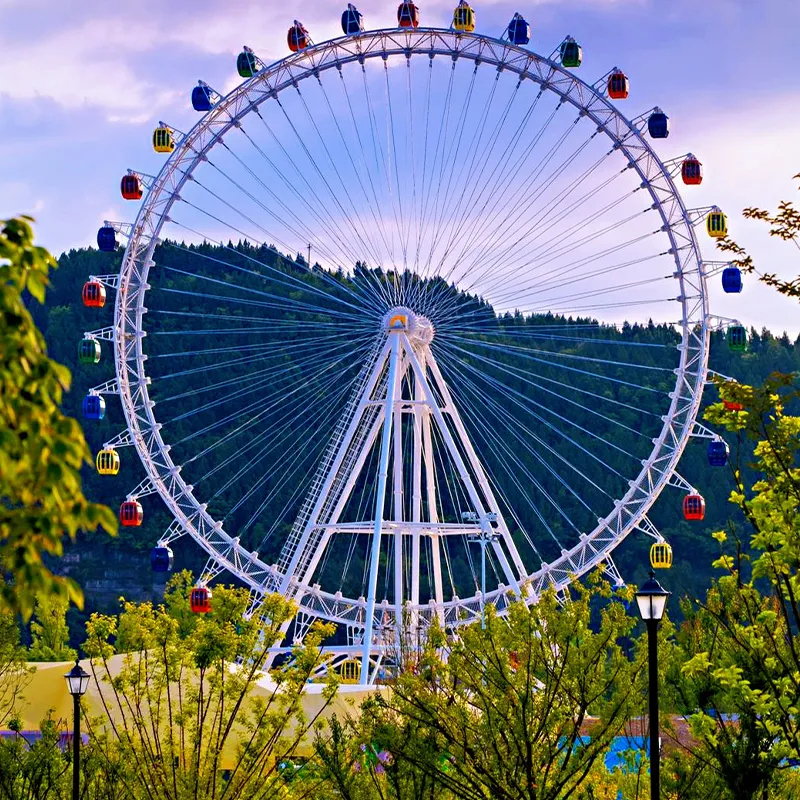
An example of a 66M Truss Ferris Wheel, designed for durability and an immersive experience.
Vendor Comparison: Selecting the Right Ferris Wheel Partner
When considering the acquisition of large-scale amusement rides like the 66M Truss Ferris Wheel, a thorough "vendor comparison" is critical. The market offers a range of "types of ferris wheels" and manufacturers, each with distinct strengths. Key differentiators include engineering expertise, manufacturing quality, adherence to international safety standards, customization capabilities, and after-sales support.
| Feature/Criterion | Z.Rollercoaster (Our Offering) | Competitor A (e.g., European Manufacturer) | Competitor B (e.g., North American Manufacturer) |
|---|---|---|---|
| Primary Keyword Focus | Bayside Ferris Wheel, Truss Design, 66M Class | Luxury Observation Wheel | Modular Adventure Wheel |
| Engineering & Design Prowess | Advanced FEA, Optimized Truss Structures, Customization | Aesthetic Focus, Proprietary Cabin Designs | Rapid Deployment, Standardized Components |
| Material Quality & Standards | High-Strength Steel (Q345B/C), ISO/EN/ASTM Compliance | European Steel Standards, High-End Finishes | ASTM Certified Materials, Robust Industrial Grade |
| Corrosion Protection | Multi-layer marine-grade coating system (excellent for coastal areas) | Standard industrial coatings, optional upgrades | Galvanized & powder-coated where applicable |
| Energy Efficiency | Optimized Drive, Planetary Gearbox, Potential Regenerative Braking | Standard electric drives, moderate efficiency | Focus on robust power, less on peak efficiency |
| Project Lead Time | Competitive & Transparent (typically 12-18 months) | Longer lead times (18-24 months) | Shorter for standard models (10-14 months), longer for customization |
| Cost-Effectiveness (Total Ownership) | High value, excellent ROI through durability & efficiency | Premium pricing, strong brand reputation | Mid-range initial cost, variable long-term |
| After-Sales Support | Global installation & support, comprehensive warranty | Regionally focused support, strong local network | Modular spare parts, online diagnostics |
Our offering distinguishes itself through a blend of cutting-edge engineering, robust material selection, and a commitment to longevity and operational efficiency. When evaluating "different types of ferris wheels" or specific "ferris wheel types," it's crucial to assess not just the initial "cost to buy a ferris wheel" but also the total cost of ownership, including maintenance, energy consumption, and projected service life.
Customized Solutions and Application Case Studies
Every major infrastructure project has unique requirements, and our approach to delivering a bayside ferris wheel is rooted in providing fully customized solutions. From aesthetic integration with local architecture to specialized cabin designs and interactive digital features, we work closely with clients to bring their vision to life.
Customization Options:
- Cabin Design: Options for standard, VIP, or themed cabins, including air conditioning, integrated multimedia screens, Wi-Fi connectivity, and accessibility features.
- Lighting & Aesthetic Integration: Dynamic LED lighting systems for captivating night-time displays, custom branding elements, and color schemes to match project themes.
- Environmental Adaptation: Enhanced corrosion protection for coastal or high-humidity regions, specialized heating/cooling systems for extreme climates, and wind load optimization.
- Control & Monitoring Systems: Advanced PLC-based control systems with remote monitoring capabilities, predictive maintenance analytics, and integration with site-wide management platforms.
Application Case Studies:
Our extensive experience includes successful deployments in various challenging environments and high-traffic locations.
Case Study 1: Coastal City Landmark Project
Client: Major Coastal City Tourism Development Authority (Asia-Pacific)
Challenge: Design and install a visually striking, durable ferris wheel capable of withstanding severe marine conditions while serving as a primary tourism draw.
Solution: Deployed a customized 66M Truss Ferris Wheel with a five-layer marine-grade anti-corrosion coating system, specifically engineered for high salt-spray environments. Cabins were equipped with robust climate control and reinforced safety glass. The project was completed within 16 months, from design finalization to public opening.
Outcome: The attraction became an immediate landmark, drawing over 1.5 million visitors in its first year. Regular inspections confirm the integrity of the corrosion protection, showcasing the long-term reliability of the structure in a demanding coastal setting. Customer feedback highlighted the smooth ride quality and panoramic views.
Case Study 2: Integrated Resort Entertainment Complex
Client: International Resort & Casino Group (Middle East)
Challenge: Integrate a large ferris wheel into an existing luxury resort complex, requiring aesthetic harmony, VIP cabin experiences, and operation in a high-temperature desert climate.
Solution: Provided a 66M Truss Ferris Wheel with fully enclosed, air-conditioned VIP cabins featuring luxury interiors and interactive infotainment. Structural components were specified with materials and coatings suitable for extreme heat and sand abrasion. A specialized control system was integrated with the resort's existing smart infrastructure.
Outcome: The ferris wheel became a signature attraction, enhancing the resort's luxury offerings and providing a unique perspective of the surrounding landscape. Operational performance in high temperatures has been consistent, with minimal energy consumption due to efficient climate control and drive systems.
Trust & Support: FAQ, Lead Time, Warranty, and Customer Service
Building confidence and ensuring client satisfaction are paramount. Our commitment extends beyond the sale, encompassing robust support and transparent processes.
Frequently Asked Questions (FAQ):
- Q: What are the primary safety certifications for your bayside ferris wheel?
- A: Our ferris wheels are designed and manufactured in compliance with major international amusement ride safety standards, including EN 13814 (Amusement rides and devices – Safety), ASTM F2291 (Standard Practice for Design of Amusement Rides and Devices), and ISO 17842 (Amusement rides and amusement devices – Safety of operation and design). We also adhere to ISO 9001 for quality management.
- Q: Can the design be adapted for extreme weather conditions?
- A: Absolutely. Our engineering team specializes in adapting designs for specific environmental challenges, whether it's enhanced corrosion protection for coastal areas, additional structural reinforcement for high wind/seismic zones, or advanced climate control for cabins in extreme temperatures (hot or cold). We conduct detailed site-specific wind load and seismic analyses.
- Q: What is the estimated operational cost compared to other attractions?
- A: While initial investment for a large ferris wheel is substantial, operational costs are generally competitive. Our wheels feature energy-efficient drive systems and durable components, leading to lower utility bills and reduced maintenance frequency. Factors like location, electricity rates, and staffing influence overall operational expenses, which we can help project.
Lead Time & Fulfillment:
The typical lead time for a 66M Truss Ferris Wheel, from contract signing to factory acceptance testing (FAT), is approximately 12-18 months, depending on customization levels. On-site installation and commissioning usually add another 4-6 months, bringing the total project fulfillment to around 16-24 months. We provide a detailed project timeline at the outset, ensuring transparency and adherence to schedules.
Warranty Commitments:
We offer a comprehensive warranty package covering structural components for 5 years and mechanical/electrical components for 2 years from the date of final acceptance. Extended warranty options and long-term service contracts are also available, providing peace of mind and protecting your investment for decades.
Customer Support & After-Sales Service:
Our commitment to clients extends throughout the entire lifespan of the ferris wheel. We provide:
- Dedicated Project Management: A single point of contact for project coordination from inception to completion.
- Global Installation & Commissioning: Expert teams dispatched worldwide for efficient and safe on-site assembly and testing.
- Operator & Maintenance Training: Comprehensive training programs for your operational and technical staff to ensure safe and efficient day-to-day management.
- Spare Parts & Logistics: A readily available supply chain for genuine spare parts, ensuring minimal downtime.
- Technical Support & Remote Diagnostics: 24/7 technical assistance and remote diagnostic capabilities to address any operational issues promptly.
- Scheduled Maintenance & Inspection Services: Optional long-term maintenance contracts to ensure peak performance and adherence to safety regulations over the ride's lifetime.
References
- European Committee for Standardization. (2019). EN 13814:2019 - Amusement rides and amusement devices – Safety.
- ASTM International. (2020). ASTM F2291 - Standard Practice for Design of Amusement Rides and Devices.
- International Organization for Standardization. (2017). ISO 17842:2017 - Amusement rides and amusement devices – Safety of operation and design.
- International Organization for Standardization. (2015). ISO 9001:2015 - Quality management systems – Requirements.
- DNV GL. (2016). Recommended Practice DNVGL-RP-0518 - Risk assessment of amusement rides.
-
Ethiopian governmentApr.12,2024
-
On March 20-22Apr.12,2024
-
Comprehensive Guide to Choosing the Perfect sightseeing wheelApr.16,2026
-
Guide to Choosing a Roller Coaster and Ferris Wheel for Your ParkApr.09,2026
-
Find Your Perfect Portable Ferris Wheel for Sale and Elevate EntertainmentApr.07,2026
-
The Captivating World of Portable Ferris Wheels and Event EntertainmentApr.04,2026