
About Ferris Wheel: Safe, LED-Lit Rides for Parks & Events
Inside the 89M Truss Ferris Wheel: Design Notes, Data, and Real-World Lessons
If you’re hunting for a clear, no-fluff explainer about ferris wheel procurement and performance, this is the field report I wish I’d had years ago. The quick headline: the 89M Truss Ferris Wheel is big, Class A, and—surprisingly—more power efficient than many assume when properly commissioned.
Industry trends I’m seeing
- Iconic skylines: city planners want striking silhouettes with programmable LED façades.
- Sustainability: friction drive + smart VFDs reduce peaks; LEDs and regenerative systems are becoming standard.
- Predictive maintenance: vibration and torque analytics cut downtime.
- Inclusive design: more accessible cabins, climate control, and quiet HVAC.
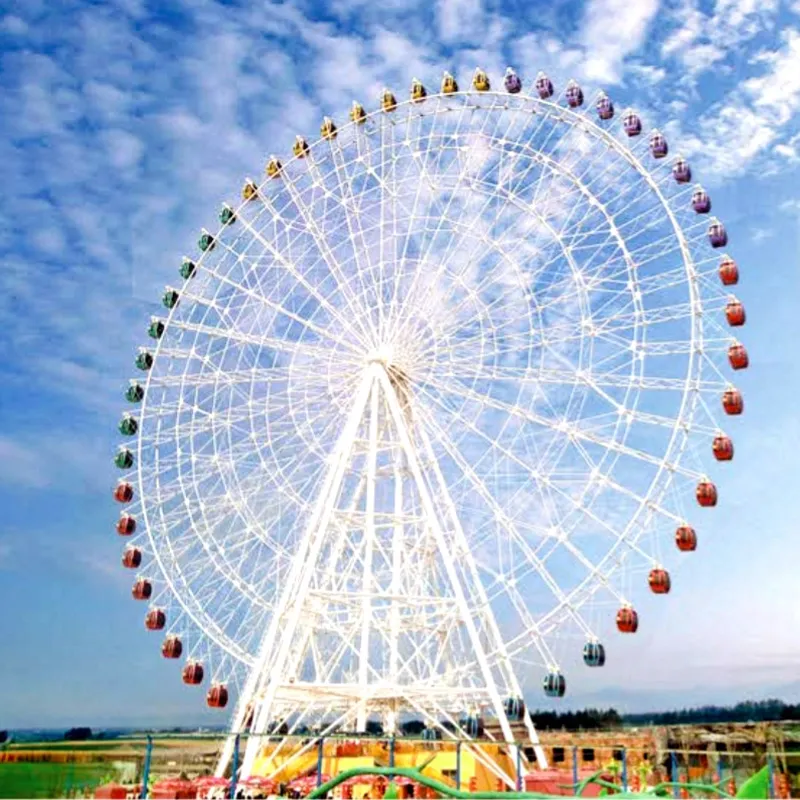
Product snapshot: 89M Truss Ferris Wheel
Origin: No.2969 Xiangdu South Road, Xiangdu District, Xingtai City, Hebei Province. To be honest, the numbers here are solid and the layout is practical for dense sites.
| Model | 89M Truss Ferris Wheel | Equipment Level | Class A (Viewing Vehicle) |
| Total/Operating Height | 89 m | Rotary Diameter | 83.5 m |
| Cabs | 54 (≈6 persons/car; 324/cycle) | Speed | ≈18 min/rev (real-world may vary) |
| Drive Power | 45 kW | AC Power | 54×2 kW = 108 kW (total) |
| Installed Capacity | 188 kVA | Power Supply | 3N+PE 380/220V 50 Hz |
| Footprint | Projection 85×45 m; Base 39×45 m | Usage / Design Life | Fixed / ≈20 years |
How it’s built and tested
Materials: high-strength structural steel (often Q345B or equivalent) with hot-dip galvanizing and marine-grade topcoat; 10.9-grade bolts; sealed bearings; low-noise HVAC per cabin.
Methods: robotic welding on primary truss nodes, precision machining of hubs, multi-pass NDT (UT/MT), torque verification, dynamic balancing, electrical tests (insulation, earth continuity), functional PLC-Failsafe validation.
Standards typically referenced: EN 13814:2019, ISO 17842 series, ASTM F2291, and GB 8408. Factory FAT is followed by site SAT; service life modeling is based on fatigue load spectra and corrosion category C3–C4 (location-dependent).
Where it fits (and why guests love it)
- Urban waterfronts and mixed-use malls: a calm, photogenic anchor attraction.
- Resorts and expo parks: steady throughput, high dwell time.
- Tourism districts: premium cabins (VIP, glass-floor) add upsell.
Feedback I hear a lot: “quiet ride, great views, and cool cabins.” Operators mention predictable OPEX and fewer surprise stoppages after commissioning tweaks.
Vendor comparison (quick take)
| Vendor | Height Range | Certs (typ.) | Lead Time | After-Sales | Price Band |
|---|---|---|---|---|---|
| ZP Roller Coaster (89M Truss) | ≈65–120 m | EN 13814, ISO 17842, GB 8408 | ≈8–12 months | Onsite+remote, spare kits | Mid–Upper |
| Vendor B | ≈40–100 m | ASTM F2291, EN 13814 | ≈10–14 months | Remote first | Mid |
| Vendor C | ≈25–80 m | Regional GB/CE | ≈6–10 months | Basic | Budget–Mid |
Customization and options
- Cabins: standard, VIP, glass-floor, wheelchair-friendly layouts.
- Lighting: addressable LEDs with DMX shows; low-glare modes.
- Theming: colors, decals, plaza landscaping, ticketing kiosk design.
- Controls: SCADA dashboards, energy profiling, remote diagnostics.
A recent waterfront client (SEA region) reported around 12% higher evening footfall after a targeted LED show—small sample size, but telling.
Test data and OPEX notes
- Cycle time: ≈18 min/rev; loading strategy affects real throughput.
- Measured drive draw: ≈18–35 kW during steady rotation (site-specific).
- Noise at plaza edge: ≈55–60 dB(A) with HVAC running.
- Corrosion protection: hot-dip galvanizing + duplex coating; 10–15 year repaint cycle depending on environment.
If you’re drafting a brief about ferris wheel siting, don’t forget wind studies, evacuation plans, and grid capacity checks. For marketing decks about ferris wheel rollouts, include night renders and a realistic commissioning calendar—saves headaches later.
References
-
Ethiopian governmentApr.12,2024
-
On March 20-22Apr.12,2024
-
Comprehensive Guide to Choosing the Perfect sightseeing wheelApr.16,2026
-
Guide to Choosing a Roller Coaster and Ferris Wheel for Your ParkApr.09,2026
-
Find Your Perfect Portable Ferris Wheel for Sale and Elevate EntertainmentApr.07,2026
-
The Captivating World of Portable Ferris Wheels and Event EntertainmentApr.04,2026