
Double Ferris Wheel For Sale - Ultimate Park & Fairground Ride
Strategic Investment: The Power of a Double Ferris Wheel for Sale
In the rapidly evolving global tourism and entertainment sectors, major attractions are continually sought to capture market share and provide unforgettable experiences. A double ferris wheel for sale represents not just an amusement ride, but a strategic investment in urban development, leisure infrastructure, and iconic branding. These magnificent structures, often becoming city landmarks, signify a commitment to unparalleled visitor engagement and economic stimulus. The demand for such grand attractions is fueled by increasing urbanization, the growth of theme parks, and the desire for unique, panoramic viewing experiences. Modern designs, often incorporating an electric ferris wheel drive system and features like enclosed ferris wheel gondolas, ensure year-round operation and enhanced guest comfort, making them incredibly attractive assets for developers and operators alike.
The market for large-scale amusement rides is experiencing robust growth, driven by investments in new tourist destinations and the expansion of existing ones. According to the International Association of Amusement Parks and Attractions (IAAPA), the global amusement park industry is projected to reach over $70 billion by 2027, with major observation wheels being key drivers of attendance and revenue. Operators are increasingly looking for attractions that offer a high return on investment, extensive visitor appeal, and long operational lifespans. A well-designed double ferris wheel ride stands out by offering a unique visual spectacle and often higher capacity than traditional single-wheel designs, addressing the burgeoning demand for high-throughput, high-impact attractions.
The Engineering Marvel: Manufacturing Process of a Double Ferris Wheel
The creation of a monumental structure like a double ferris wheel for sale is a testament to advanced engineering and precision manufacturing. The process demands meticulous planning, rigorous material selection, and adherence to the highest international safety and quality standards. The 120m Pure steel cable Ferris Wheel serves as an exemplary model for the sophisticated production methodologies involved.
1. Material Sourcing and Preparation
- Structural Steel: High-grade structural steel, typically Q345B/C (equivalent to S355JR/J0 in European standards) or higher strength variants like S460, is selected for its superior yield strength, fracture toughness, and weldability. For critical load-bearing components and cable systems, specialized high-tensile steel alloys are utilized. All incoming materials undergo stringent chemical composition analysis and mechanical property testing (tensile strength, impact resistance, hardness) as per ASTM A6/A6M or EN 10025 standards, with full material traceability records maintained.
- Cables: For structures like the 120m Pure steel cable Ferris Wheel, high-strength galvanized or stainless steel cables are employed, manufactured to precise specifications, often conforming to ISO 2408 or ASTM A603 standards, ensuring maximum fatigue resistance, corrosion protection, and longevity. Each cable batch is subjected to tensile rupture tests.
- Bearings: Precision-engineered spherical roller bearings or custom-fabricated thrust bearings, designed for heavy radial and axial loads and specified for extended service life, are sourced from certified global suppliers, often meeting ISO 15312 standards for rolling bearings and undergoing rigorous quality checks.
2. Component Fabrication and Machining
- Cutting and Forming: Steel plates and sections are cut using advanced CNC plasma or laser cutting machines, ensuring precise dimensions with minimal material waste. Bending and rolling processes form intricate tubular sections and curved elements with high accuracy, critical for the wheel's concentricity and balance.
- Machining: Critical components such as hubs, main axles, and bearing housings undergo extensive CNC machining (milling, turning, boring) to achieve extremely tight geometric tolerances, often within micron levels. This precision is crucial for the smooth, quiet, and safe operation of an exhibition giant wheel and minimizes wear on moving parts.
- Welding: Fabrication involves highly certified welders utilizing advanced techniques such as Flux-Cored Arc Welding (FCAW), Submerged Arc Welding (SAW), and Gas Metal Arc Welding (GMAW). All welds are subjected to comprehensive Non-Destructive Testing (NDT), including ultrasonic testing (UT), magnetic particle testing (MPT), and radiographic testing (RT) in accordance with ISO 17638, ISO 17637, and ISO 17636 standards, ensuring the complete structural integrity and fatigue resistance of every joint.
- Corrosion Protection: After fabrication, all steel components undergo meticulous surface preparation, typically shot blasting to Sa 2.5 or Sa 3.0 standard (ISO 8501-1) to ensure optimal adhesion. This is followed by a multi-layer anti-corrosion coating system, usually comprising a zinc-rich epoxy primer (60-80 microns), an intermediate high-build epoxy coating (120-150 microns), and a high-performance aliphatic polyurethane topcoat (50-70 microns). This system offers exceptional resistance against UV radiation, chemicals, and environmental factors, ensuring an extended service life of 30-50 years, even in harsh coastal or industrial climates.
3. Pre-Assembly, Testing, and Quality Assurance
- Pre-Assembly: Major structural sections, including spokes and hub assemblies, are often pre-assembled in the factory to verify fit-up, alignment, and dimensional accuracy, minimizing on-site construction time and mitigating potential erection issues. This also allows for initial testing of sub-systems.
- Load Testing & Dynamic Analysis: Critical load-bearing components are subjected to static and dynamic load tests beyond their specified operational limits to validate design calculations and material performance under stress. Finite Element Analysis (FEA) and Computational Fluid Dynamics (CFD) simulations are extensively used during the design phase to predict structural behavior under various wind loads (e.g., up to 120 km/h survival wind speed), seismic events (conforming to local building codes), and operational stresses, ensuring compliance with amusement ride safety standards such as ASTM F2291 or EN 13814.
- Control System Integration: The sophisticated control systems, incorporating industrial-grade PLCs (Programmable Logic Controllers), variable frequency drives (VFDs) for precise speed control, and advanced sensor arrays for monitoring speed, position, cabin door status, and safety interlocks, are thoroughly factory-tested for reliability, responsiveness, and redundancy.
- Documentation and Certification: Comprehensive documentation, including material certificates, NDT reports, structural design calculations, electrical schematics, operational manuals, and detailed maintenance schedules, is compiled. Products are certified by recognized independent third-party bodies (e.g., TÜV, CE, ISO 9001 for manufacturing quality) ensuring adherence to the most rigorous international safety and quality standards.
The target industries for these advanced Ferris wheels predominantly include large-scale theme parks, urban entertainment districts, major tourist destinations, and landmark development projects. The advantages are multi-fold: superior structural integrity ensures safety and longevity, advanced electric ferris wheel drive systems offer energy saving through optimized power consumption and regenerative braking, and multi-layer coating systems provide exceptional corrosion resistance, crucial for coastal or high-humidity environments, thus minimizing lifecycle costs.
Key Technical Specifications: 120m Pure Steel Cable Ferris Wheel
Understanding the technical parameters is crucial for assessing the suitability and performance of an eye wheel or any large observation ride. The 120m Pure steel cable Ferris Wheel exemplifies cutting-edge design and engineering. Below are its generalized specifications, highlighting the scale and technological sophistication involved:
| Parameter | Specification |
|---|---|
| Overall Height | Approx. 120 meters (394 feet) from ground level |
| Wheel Diameter | Approx. 110-115 meters |
| Passenger Capacity | 720-1080 people (e.g., 60 gondolas x 12-18 people/gondola) |
| Number of Gondolas | 60 (fully enclosed, air-conditioned, panoramic views) |
| Ride Duration | Approx. 20-30 minutes per revolution (adjustable) |
| Operational Speed | 0.1-0.2 m/s (variable speed drive for smooth acceleration/deceleration) |
| Total Power Requirement | Approx. 400-600 kW (peak, including main drive, HVAC, lighting, auxiliary systems) |
| Main Structure Material | High-strength structural steel (e.g., Q345B/C, S355JR/J0) and high-tensile steel cables |
| Drive System | Redundant electric variable frequency motor drives with regenerative braking |
| Safety Standards Adherence | EN 13814, ASTM F2291, ISO 17846, GB 8408 (China), local building and safety codes |
| Wind Resistance | Operational up to 88 km/h (Beaufort 9), Survival up to 120 km/h (Beaufort 12) |
| Seismic Resistance | Designed for regional seismic zone requirements (e.g., UBC/IBC standards) |
| Service Life | 30-50 years with proper maintenance and periodic structural assessments |
The structural design incorporates advanced architectural principles, focusing on optimal load distribution and wind dynamics derived from extensive CFD modeling. The use of a pure steel cable system not only contributes to the aesthetic elegance but also enhances structural flexibility and resilience, particularly against dynamic loads and seismic events. The redundant braking and control systems, coupled with real-time SCADA monitoring of all critical parameters, establish an exceptionally high safety profile for passengers, far exceeding minimum regulatory requirements.
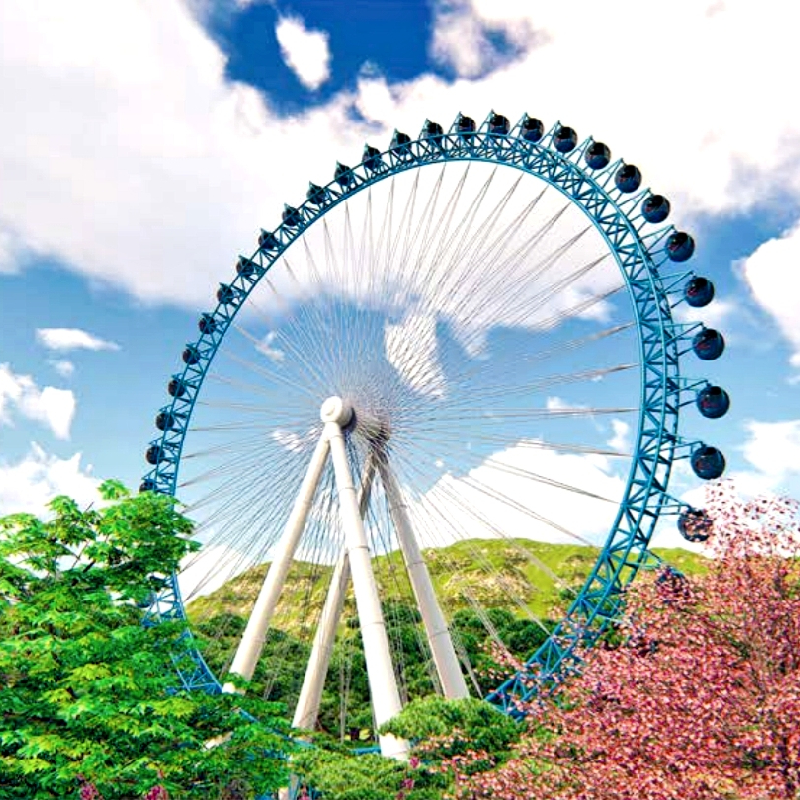
This image showcases the grandeur and intricate design typical of a large-scale observation wheel, exemplifying the type of advanced engineering present in a modern double ferris wheel for sale. The clean lines, robust structure, and iconic presence are indicative of the focus on both aesthetic appeal and structural integrity, crucial for attracting millions of visitors and ensuring operational longevity.
Technical Advantages and Operational Excellence
Investing in a modern double ferris wheel ride brings a suite of technical advantages that translate directly into operational excellence and enhanced visitor experience:
- Superior Structural Integrity: Engineered with advanced materials and sophisticated finite element analysis, these wheels offer exceptional stability and resistance to environmental stressors (high winds, seismic activity), minimizing maintenance and enhancing safety. The calculated fatigue life, typically designed for over 100,000 operational cycles, exceeds industry standards, ensuring reliable operation for decades without significant structural degradation.
- Energy Efficiency: Modern electric ferris wheel drive systems, featuring high-efficiency permanent magnet motors, precision planetary gearboxes, and regenerative braking, significantly reduce power consumption compared to older hydraulic or friction-driven systems. This translates to substantial operational cost savings, with some systems demonstrating up to 30% reduction in energy usage, contributing to a reduced environmental footprint.
- Enhanced Durability and Corrosion Resistance: The multi-layer protective coating systems (zinc-rich epoxy primer, high-build epoxy mid-coat, polyurethane topcoat), combined with the use of high-quality stainless steel for critical fasteners and components, provide unparalleled protection against corrosion, even in marine or highly humid environments. This extends component lifespan, reduces the need for frequent refurbishments, and lowers long-term maintenance costs.
- Advanced Safety Systems: Incorporating redundant power supplies, multiple independent electromagnetic and hydraulic braking systems, automated diagnostic tools, and real-time monitoring via SCADA (Supervisory Control and Data Acquisition) systems ensures the highest levels of operational safety. Features like fully enclosed ferris wheel gondolas with emergency egress systems and two-way communication further enhance passenger safety and comfort.
- Optimized Maintenance: Design for maintainability is a core principle, incorporating easily accessible service points, modular components, and comprehensive digital maintenance logs. This minimizes downtime and operational costs. Remote diagnostics capabilities, utilizing IoT sensors, further streamline troubleshooting and predictive maintenance schedules, improving overall reliability.
- Aesthetic and Experiential Superiority: Beyond engineering, these structures are designed to be visually stunning landmarks. Integrated, programmable LED lighting systems allow for dynamic light shows and architectural illumination, transforming the wheel into a nocturnal spectacle and enhancing its appeal as an exhibition giant wheel or urban icon. Panoramic glass gondolas offer unobstructed views, creating a premium visitor experience.
Application Scenarios and Market Impact
The versatility and iconic status of a grand observation wheel, particularly a double ferris wheel for sale, make it suitable for a diverse range of high-impact applications across various sectors:
- Major Urban Development Projects: As centerpieces for revitalized city districts, new urban hubs, or mixed-use developments, these wheels attract millions of tourists and residents, boosting local economies and property values. They provide a unique perspective on the urban landscape, akin to a permanent eye wheel, and often become a symbol of city identity.
- Theme Parks and Amusement Resorts: Serving as anchor attractions, they significantly draw visitors and extend dwell times, offering a high-capacity ride that appeals to all age groups. An enclosed ferris wheel ensures comfort and continuous operation regardless of ambient weather conditions (rain, heat, cold), maximizing revenue potential and operational days.
- Tourism Destinations and Waterfronts: Positioned in scenic locations, they leverage natural beauty to enhance the visitor experience, creating memorable photo opportunities and significantly enhancing the destination's global appeal. Many a fair ferris wheel or fairground wheel has evolved from a temporary attraction into a permanent, indispensable landmark.
- Exhibition Centers and Event Venues: Temporary or permanent installations can provide a unique viewing platform for large-scale events, international festivals, or major trade shows, enhancing the event's prestige and offering a distinctive vantage point for attendees.
The economic impact extends far beyond direct ticket sales, generating significant indirect revenue through surrounding retail, dining, hospitality services, and increased regional tourism. Studies by tourism boards often show a 20-40% increase in ancillary spending around major landmark attractions, positioning the Ferris wheel as a powerful catalyst for regional development and a substantial return on investment.
Vendor Comparison: Critical Factors for Selection
Choosing the right manufacturer for a double ferris wheel for sale is a critical decision with long-term implications for safety, operational efficiency, financial viability, and brand reputation. A rigorous vendor comparison, evaluating key performance indicators, is essential for mitigating risks and ensuring project success.
- Design and Engineering Capabilities: Evaluate the vendor's portfolio for extensive experience in large-scale structural engineering, proven use of advanced simulation tools (FEA, CFD) for structural and wind load analysis, and an innovation track record in amusement ride design and safety. Look for in-house engineering teams with relevant professional accreditations.
- Manufacturing Quality and Certifications: Verify adherence to international quality management systems (ISO 9001, ISO 14001), independent product certifications (e.g., CE marking for European markets, TÜV Rheinland for global safety assessment), and robust quality control processes at every stage of production, including material traceability and NDT protocols.
- Project Management and Installation Expertise: A vendor must demonstrate a track record of successful, on-time, and on-budget large-scale installations globally, supported by experienced project managers and certified installation teams. This includes expertise in complex logistics, foundation engineering, and site-specific challenges.
- After-Sales Support and Maintenance: Assess the availability of comprehensive spare parts, rapid-response technical support, scheduled preventive maintenance programs, and robust operator and maintenance staff training. Long-term service agreements are often a valuable indicator of commitment.
- Customization and Aesthetic Integration: The ability to tailor designs to specific site conditions, architectural themes, local cultural nuances, and intricate branding requirements is paramount for landmark projects. This includes lighting, gondola design, and overall structural aesthetics.
| Criteria | Manufacturer Alpha (e.g., ZPro Roller Coaster) | Manufacturer Beta (Competitor Example) |
|---|---|---|
| Years in Operation / Project Experience | 20+ years, 15+ large-scale observation wheels globally | 10-15 years, 5-8 large-scale regional installations |
| Certifications & Standards Adherence | ISO 9001, ISO 14001, CE, TÜV Rheinland certified, ASTM F2291, EN 13814 compliant, GB 8408 | ISO 9001, CE (for specific components), generally meets regional standards |
| Design Customization | Full architectural, structural, and technical customization; includes advanced 3D renderings, virtual reality walkthroughs, and bespoke gondola designs | Limited customization on standard models, minor aesthetic adjustments |
| Technology & Innovation | Pure steel cable design, regenerative braking, advanced smart PLC control systems, remote diagnostics, IoT integration, cutting-edge lighting systems | Standard gear-drive, basic PLC control systems, traditional lighting |
| After-Sales Support & Warranty | Dedicated global support team, 24/7 hotline, 3-5 year structural warranty, 1-2 year components warranty, extensive spare parts inventory, comprehensive training programs | Regional support, 1-2 year standard warranty, limited spare parts in stock, basic training |
| Project Lead Time (indicative) | 18-24 months (design to commissioning for 100m+ wheel) | 12-18 months (for smaller/standard models) |
A manufacturer with a strong portfolio of successful global projects, adherence to the highest international standards, and comprehensive post-installation support, like ZPro Roller Coaster for its 120m Pure steel cable Ferris Wheel, is crucial for mitigating risks and ensuring long-term operational success and profitability. This includes providing verifiable data on previous projects' performance and safety records.
Customized Solutions: Tailoring Your Vision
Recognizing that each project has unique requirements and visions, leading manufacturers offer extensive customization options for any double ferris wheel for sale. This bespoke approach ensures the final product aligns perfectly with the client's strategic objectives and site-specific demands:
- Architectural Design and Height: Full flexibility in modifying structural aesthetics, spoke designs, and overall architectural theme. This includes adjusting height parameters to complement the surrounding skyline, comply with aviation regulations, or meet specific urban planning requirements. We offer options from classical designs to ultra-modern, futuristic structures.
- Gondola Customization: A wide array of options for passenger cabins, including standard fully enclosed ferris wheel cabins with advanced HVAC systems, soundproofing, and panoramic glass, through to opulent VIP cabins with luxury interiors, entertainment systems, and private dining facilities. Themed cabins, accessibility-compliant designs, and special event configurations are also available.
- Lighting and Digital Integration: Sophisticated, programmable LED lighting systems for dynamic visual displays and architectural illumination, allowing for seasonal themes, holiday spectacles, or corporate branding. Integration of interior media screens within gondolas, interactive augmented reality experiences for passengers, and exterior projection mapping capabilities.
- Branding and Theming: Seamless incorporation of corporate branding, unique color schemes, and thematic elements to align with the client's brand identity or the park's overall narrative. This includes custom painting, facade elements, and signage integration.
- Foundation and Site Integration: Bespoke foundation designs developed in collaboration with geotechnical engineers to suit varied geological conditions, seismic zones, and environmental factors. Seamless integration with existing infrastructure, pedestrian flows, and detailed landscaping plans to enhance the overall visitor experience and site functionality.
These tailored solutions ensure that the final installation not only meets functional and safety requirements but also serves as a distinct, powerful architectural statement and a premium visitor attraction in its chosen location, maximizing its commercial appeal and cultural significance.
Application Case Studies (Generalized Examples)
The deployment of large-scale observation wheels has consistently demonstrated significant positive impacts on urban and leisure landscapes, driving economic growth and enhancing cultural appeal.
Case Study 1: Metropolitan Waterfront Revitalization Project
A major coastal city sought to revitalize its aging waterfront district and establish a new focal point for tourism and local recreation. They partnered with a prominent manufacturer to design and install a custom 150-meter double ferris wheel ride, featuring 72 fully enclosed ferris wheel gondolas. The project involved complex foundation work due to proximity to water and required advanced corrosion-resistant materials and structural design to withstand high wind loads from the ocean. Within the first year of operation, the wheel attracted over 2.5 million visitors, exceeding initial projections by 25%. This led to a documented 35% increase in foot traffic to surrounding retail and dining establishments and generated an estimated $150 million in additional tourism revenue for the city. The wheel became an instant landmark, featured prominently in national and international tourism campaigns and media, embodying the city's renewed vibrancy and successfully anchoring the waterfront's transformation.
Case Study 2: Integrated Entertainment Complex Expansion
A leading international theme park, aiming to enhance its appeal and capacity, introduced a distinctive ride that offered both thrilling views and a unique guest experience. They commissioned a manufacturer for a 100-meter electric ferris wheel, designed to integrate seamlessly with the park's existing infrastructure and thematic elements. The custom wheel featured 50 VIP-class gondolas, each equipped with interactive digital displays and premium seating, offering a high-end experience. Post-installation analysis revealed a 18% surge in annual park attendance, and a significant expansion in its demographic reach, attracting more high-spending family groups and international tourists. The ride's energy-efficient design, utilizing regenerative braking, also contributed to the park's corporate sustainability goals by reducing its overall carbon footprint, demonstrating that iconic attractions can also be environmentally responsible.
Trustworthiness & Client Support: FAQs, Lead Time, Warranty
Frequently Asked Questions (FAQs)
- Q: What are the typical lead times for a project from initial design to commissioning?
- A: For a 120m-class Ferris wheel, the lead time typically ranges from 18 to 24 months. This comprehensive timeline encompasses detailed design (3-6 months), material procurement and fabrication (8-12 months), rigorous factory testing, international logistics, on-site installation, and final commissioning with independent safety certification. Custom designs or highly complex site conditions may extend this timeline, but project managers provide transparent, phase-by-phase updates.
- Q: What are the primary safety features integrated into your Ferris wheels?
- A: Our Ferris wheels incorporate multi-redundant safety systems designed to fail-safe. These include multiple independent braking systems (e.g., primary electromagnetic, secondary hydraulic), emergency power supplies, automated diagnostic sensors monitoring structural integrity, wind speed, vibration, and operational parameters, and a highly reliable PLC-based control system designed to bring the ride to a safe, controlled stop in any contingency. All designs are rigorously certified to international safety standards like EN 13814, ASTM F2291, and local regulatory requirements.
- Q: What kind of site preparation and infrastructure is required?
- A: Extensive geotechnical surveys are required to assess soil conditions. Based on this, a bespoke foundation design (e.g., deep piles, raft foundations, or caissons) will be engineered to safely support the immense loads. We provide detailed foundation plans and technical supervision for local civil engineering works. Adequate site access for large components and heavy lifting cranes during installation is also a critical consideration, along with power supply, water, and data connectivity infrastructure.
- Q: Can the Ferris wheel operate in all weather conditions?
- A: Our enclosed ferris wheel gondolas are climate-controlled (heating and air conditioning), allowing for comfortable operation in various temperatures and light precipitation. However, operational limits for wind speed (typically up to 88 km/h, Beaufort 9), and other severe weather conditions (e.g., lightning storms, heavy snow, extreme ice) are clearly defined in the operational manual. Automated systems are in place for safe and controlled shutdown if these limits are approached, prioritizing passenger and structural safety.
Lead Time & Fulfillment
The typical project lifecycle for a large-scale Ferris wheel, such as the 120m Pure steel cable Ferris Wheel, spans from 18 to 24 months. This comprehensive timeline includes conceptual design, detailed engineering, material sourcing, precision fabrication, rigorous factory testing, international logistics, on-site construction, and final safety inspections and commissioning. Our dedicated project management teams work closely with clients, providing regular updates and managing all phases to ensure transparent communication and adherence to agreed schedules and milestones.
Warranty Commitments
We provide a comprehensive warranty package that typically includes a structural warranty of 3 to 5 years and a 1-year warranty on electrical and mechanical components from the date of final commissioning. This warranty covers manufacturing defects and material failures under normal operating conditions. Extended warranty options and long-term service contracts are also available to provide additional peace of mind and ensure the sustained performance and longevity of your significant investment.
Customer Support & After-Sales Service
Our commitment extends far beyond the initial delivery and installation. We offer extensive after-sales support designed to maximize operational uptime and ensure the long-term success of your attraction:
- Technical Assistance: 24/7 remote and on-site technical support from qualified, multi-disciplinary engineers for diagnostics, troubleshooting, and emergency repairs.
- Spare Parts Management: A readily available inventory of critical spare parts, managed through a streamlined global logistics network, to minimize potential downtime.
- Operator and Maintenance Training: Comprehensive, hands-on training programs for your operational and maintenance staff, covering all aspects of safe operation, routine checks, preventive maintenance, and emergency procedures, ensuring your team is fully competent.
- Regular Inspections and Audits: Scheduled professional inspections, maintenance, and safety audits by our expert teams to ensure ongoing compliance with international safety standards, optimal performance, and early detection of any potential issues.
Conclusion
A double ferris wheel for sale represents a significant and highly visible investment, capable of transforming urban landscapes and driving substantial economic and cultural value. By choosing a manufacturer committed to superior engineering, stringent safety standards, comprehensive customization, and robust after-sales support, stakeholders can ensure the successful realization of a landmark attraction that will captivate audiences for generations. Such an investment not only enriches the leisure and tourism offerings but also establishes a lasting icon that enhances a region's global appeal and provides a substantial return.
References
- ASTM International. (2022). ASTM F2291: Standard Practice for Design of Amusement Rides and Devices. ASTM International.
- European Committee for Standardization. (2019). EN 13814: Safety of amusement rides and amusement devices. CEN.
- International Association of Amusement Parks and Attractions (IAAPA). (2023). Global Attractions Attendance Report. IAAPA.
- International Organization for Standardization. (2018). ISO 9001: Quality management systems – Requirements. ISO.
- International Organization for Standardization. (2014). ISO 2408: Steel wire ropes for general purposes – Characteristics – Requirements and acceptance criteria. ISO.
- International Organization for Standardization. (2016). ISO 8501-1: Preparation of steel substrates before application of paints and related products – Visual assessment of surface cleanliness – Part 1: Rust grades and preparation grades of uncoated steel substrates and of steel substrates after overall removal of previous coatings. ISO.
-
Ethiopian governmentApr.12,2024
-
On March 20-22Apr.12,2024
-
Comprehensive Guide to Choosing the Perfect sightseeing wheelApr.16,2026
-
Guide to Choosing a Roller Coaster and Ferris Wheel for Your ParkApr.09,2026
-
Find Your Perfect Portable Ferris Wheel for Sale and Elevate EntertainmentApr.07,2026
-
The Captivating World of Portable Ferris Wheels and Event EntertainmentApr.04,2026