
Ferris Wheels: Sales, Hire & Unforgettable Experiences
The Strategic Role of ferris wheels in Modern Urban and Entertainment Development
In the landscape of modern urban planning, tourism, and entertainment, the strategic deployment of observation wheels, commonly known as ferris wheels, represents a significant investment opportunity. These majestic structures are more than just amusement rides; they are iconic landmarks, revenue generators, and powerful tools for city branding and visitor engagement. For B2B decision-makers in infrastructure development, tourism, real estate, and event management, understanding the technical intricacies, market dynamics, and operational advantages of acquiring or leasing a high-quality ferris wheel is paramount.
This comprehensive overview delves into the core aspects of observation wheel technology, from manufacturing precision and performance specifications to diverse application scenarios and the critical considerations for vendor selection and customized solutions. We aim to equip industry professionals with the knowledge required to make informed decisions regarding these sophisticated capital assets.
Industry Trends: The Evolution of Observation Wheels
The global market for large-scale observation wheels has witnessed substantial growth, driven by increasing urbanization, the demand for unique leisure experiences, and the pursuit of architectural landmarks. Key trends include:
- Technological Advancements: Integration of advanced materials, energy-efficient LED lighting systems for dynamic visual displays, and sophisticated PLC-based control systems enhancing safety, operational efficiency, and ride experience.
- Sustainable Design: Growing emphasis on eco-friendly materials, reduced energy consumption through regenerative braking and efficient motor drives, and designs that minimize environmental impact.
- Experiential Tourism: Beyond panoramic views, modern ferris wheels offer VIP cabins, themed experiences, integrated dining options, and augmented reality features, transforming a simple ride into a multi-faceted attraction. The concept of a ferris wheel as a primary destination has gained traction.
- Modular Construction: Facilitating easier transport, quicker assembly, and enhanced flexibility for temporary installations or relocation, addressing needs for ferris wheel hire markets.
- Global Market Expansion: Emerging economies in Asia, the Middle East, and Africa are increasingly investing in observation wheels as symbols of development and tourist attractions.
These trends underscore the evolving role of the the ferris wheel from a simple amusement ride to a complex engineering marvel and a powerful economic driver.
Manufacturing Process Flow of Advanced Observation Wheels
The construction of a modern observation wheel is a highly complex engineering undertaking, demanding precision, adherence to stringent safety standards, and specialized fabrication techniques. The process typically involves several critical stages:
1. Design and Engineering:
- Conceptualization & Feasibility: Initial design based on client requirements, site conditions, and aesthetic goals.
- Structural Analysis: Detailed Finite Element Analysis (FEA) to model load distribution, wind resistance (up to Beaufort 10-12), seismic resilience, and material stresses. Designs adhere to international standards like EN 13814 (Amusement Rides and Amusement Devices Safety) and local building codes.
- Material Selection: Predominantly high-strength structural steel (e.g., Q345B, S355JR) for the main structure, often galvanized or coated for corrosion resistance. Cabins may utilize aluminum alloys, reinforced plastics, or laminated glass.
2. Fabrication of Components:
- Steel Processing: This includes CNC laser cutting, plasma cutting, and bending of steel plates and profiles to exact specifications. Casting and forging are used for critical load-bearing components like hubs and shaft connections.
- Welding: Automated and manual welding by certified welders, often employing MAG/MIG welding for structural integrity. All welds undergo non-destructive testing (NDT) such as ultrasonic testing (UT) and magnetic particle inspection (MPI) to meet ISO 5817 quality levels.
- Machining: Precision CNC machining for bearings, shafts, gears, and other mechanical parts to ensure tight tolerances and smooth operation.
- Corrosion Protection: Multi-layer industrial coatings (e.g., epoxy primer, polyurethane topcoat) applied after shot blasting (Sa2.5 standard) to ensure longevity and weather resistance, providing a service life typically exceeding 30 years with proper maintenance.
3. Assembly and Integration:
- Pre-assembly & Fit-up: Major sections are pre-assembled at the factory to verify fit and alignment before shipping.
- Electrical & Control Systems: Integration of advanced PLC control systems (e.g., Siemens, Allen-Bradley), motor drives, safety interlocks, communication systems, and elaborate LED lighting arrays.
- Cabin Fabrication: Construction of passenger gondolas with climate control, comfortable seating, emergency systems, and sometimes multimedia displays.
4. Testing and Quality Assurance:
- Component Testing: Hydraulic components, electrical panels, and motors undergo individual performance and stress tests.
- Structural Load Testing: Critical connections and sub-assemblies are tested for load capacity.
- Operational Testing: Post-installation, the complete observation wheel undergoes extensive no-load and full-load operational testing, including emergency stop procedures and evacuation drills, in accordance with ANSI B77.1 and EN 13814.
5. Installation and Commissioning:
- Site Preparation: Foundation construction and utility integration.
- Erection: Use of heavy-duty cranes for on-site assembly of the main structure.
- Final Adjustments & Handover: System calibration, final safety checks, and operator training.
Technical Specifications: 49M Ferris Wheel
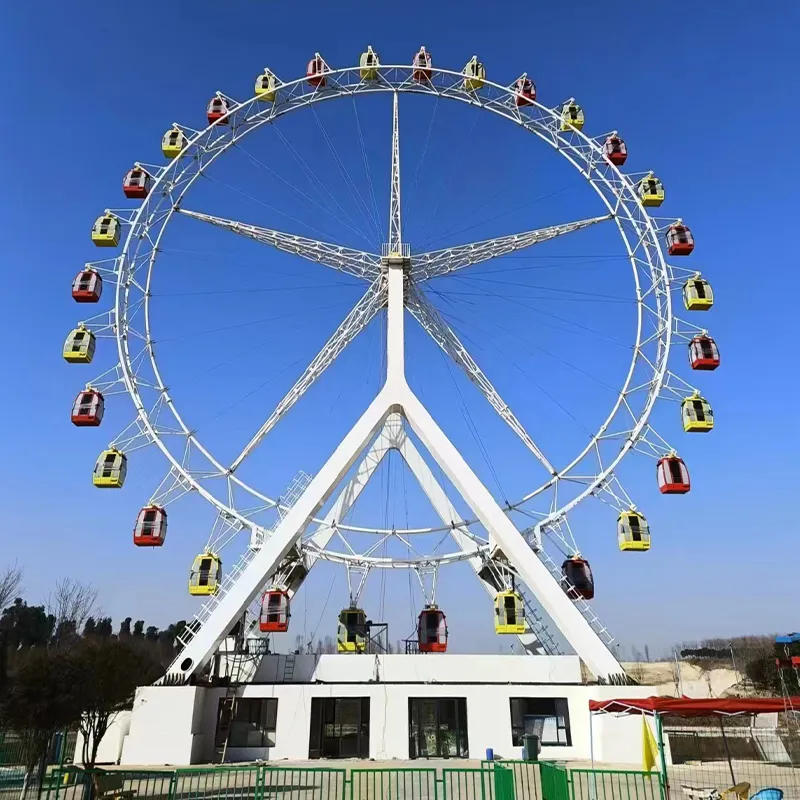
The 49-meter observation wheel is a popular choice for medium-to-large scale attractions, balancing significant visual impact with reasonable footprint and operational costs. Here are the typical specifications:
| Parameter | Specification |
|---|---|
| Total Height | Approx. 49 meters (161 feet) |
| Number of Cabins | 28-32 fully enclosed cabins |
| Cabin Capacity | 4-6 passengers per cabin (approx. 168-192 total passengers) |
| Ride Cycle Time | Approx. 10-15 minutes (adjustable) |
| Operating Speed | Approx. 0.25-0.35 m/s (variable) |
| Installed Power | Approx. 50-75 kW (main drive, lighting, HVAC) |
| Main Structure Material | High-strength structural steel (e.g., Q345B, S355JR) |
| Wind Resistance | Operational up to 12 m/s (Beaufort 6); Max design wind speed up to 50 m/s (Beaufort 12) |
| Seismic Rating | Designed for Zone II/III (dependent on specific site requirements) |
| Safety Standards | EN 13814, ANSI B77.1, local applicable regulations |
These specifications underscore the robust engineering required for a reliable and safe observation wheel. Prospective buyers should always review detailed engineering drawings and compliance certifications to ensure suitability for their specific project location and regulatory environment. The ferris wheel price can vary significantly based on these specifications and additional customizations.
Application Scenarios and Technical Advantages
The versatility of modern ferris wheels allows for deployment across various industries and environments, each benefiting from specific technical advantages.
Target Industries:
- Tourism & Entertainment: Theme parks, resorts, standalone tourist attractions, and event venues.
- Urban Development: City landmarks, waterfront developments, public parks, and mixed-use commercial centers.
- Temporary Events: Large festivals, world expos, and promotional events (e.g., for a major ferris wheel for sale promotion).
- Retail & Hospitality: Integrated into shopping malls or hotel complexes to enhance visitor experience and draw.
Technical Advantages in Application:
- Energy Saving: Advanced motor control systems, regenerative braking, and efficient LED lighting significantly reduce operational power consumption. For example, a modern 49M wheel can consume up to 30% less energy than older models due to optimized drives and variable frequency control.
- Corrosion Resistance & Durability: Use of marine-grade paints, hot-dip galvanization for structural components, and high-quality stainless steel for critical fasteners ensures longevity even in harsh coastal environments (e.g., like a bayside ferris wheel). This minimizes maintenance costs and extends service life.
- Enhanced Safety Systems: Redundant braking systems, multiple layers of emergency stop protocols, real-time diagnostic systems, and advanced fire suppression in cabins meet or exceed international safety standards, ensuring maximum passenger and operational safety.
- Operational Reliability: Robust mechanical design, high-quality bearings (e.g., SKF, FAG), and sophisticated hydraulic or electric drive systems ensure smooth, consistent operation with minimal downtime. Predictive maintenance capabilities further boost reliability.
- Architectural Integration: Modern designs allow for significant customization in aesthetics, lighting, and overall appearance, enabling seamless integration with existing urban landscapes or architectural themes, making it a true landmark rather than just a ride.
Vendor Comparison and Selection Criteria
Choosing the right vendor for an observation wheel is a critical decision impacting project success, long-term operational costs, and safety. Key factors for comparison include:
| Criterion | Importance | Description/Evaluation Points |
|---|---|---|
| Experience & Track Record | High | Years in business, number of successful installations, client testimonials, operational data from existing wheels. Proven expertise in large-scale mechanical installations. |
| Certifications & Compliance | Critical | Adherence to ISO 9001 (Quality Management), ISO 14001 (Environmental), and specific amusement ride standards (EN 13814, ANSI B77.1). Documentation of material certifications (e.g., EN 10204 3.1). |
| Engineering & Design Capability | High | In-house R&D, structural engineering expertise, ability to conduct advanced simulations (FEA, CFD), flexibility for customized solutions. |
| Manufacturing Quality | High | Use of advanced machinery (CNC, automated welding), quality control processes (NDT), material traceability, factory tour availability. |
| After-Sales Support & Maintenance | Critical | Availability of spare parts, technical support, routine maintenance schedules, emergency response, operator training programs, warranty terms. |
| Customization Options | Medium | Ability to adapt design, lighting, cabin features, and branding to specific project requirements and budget. |
| Lead Time & Logistics | Medium | Realistic project timelines, shipping expertise for large components, efficiency in site installation. |
A thorough due diligence process involving factory audits, reference checks, and detailed technical discussions is crucial to mitigating risks and ensuring a successful project when considering a ferris wheel for sale.
Customized Solutions for Unique Vision
Recognizing that each project has unique requirements, leading manufacturers offer extensive customization options for observation wheels. This flexibility ensures that the final product perfectly aligns with the client's vision, brand identity, and operational goals.
- Aesthetic Design: Tailored structural aesthetics, custom color schemes, and themed elements to match architectural surroundings or specific brand guidelines.
- Cabin Features: Options range from standard comfortable seating to luxurious VIP cabins with leather upholstery, mini-bars, Wi-Fi, infotainment systems, and even private dining experiences. Accessibility features, such as wheelchair ramps and wider doors, are standard considerations.
- Lighting Systems: Bespoke LED lighting programs offering millions of color combinations, dynamic patterns, and synchronized light shows, transforming the wheel into a nighttime spectacle and advertising medium.
- Branding Opportunities: Integration of corporate logos, specific color palettes, and digital screens for promotional content, maximizing return on investment through enhanced visibility.
- Operational Enhancements: Customized control system interfaces, advanced weather monitoring integration, remote diagnostics, and energy management solutions to optimize performance and reduce running costs.
These customized solutions ensure that whether it’s for a permanent installation or ferris wheel hire, the attraction stands out and delivers a unique experience.
Application Case Studies (Illustrative Examples)
Real-world applications demonstrate the transformative impact of well-executed observation wheel projects:
Case Study 1: Urban Regeneration Project - "Skyline Vista" (60M Observation Wheel)
- Client: Municipal Development Authority & Private Investment Group.
- Challenge: Revitalize a dilapidated waterfront area, create a new tourist draw, and boost local economy.
- Solution: Installation of a 60-meter observation wheel with climate-controlled VIP cabins and a dynamic LED lighting system. The project included enhanced public realm design around the wheel base.
- Outcome: Within the first year, the wheel attracted over 1.5 million visitors, becoming the city's top tourist attraction. Surrounding businesses reported a 40% increase in revenue, and property values in the district rose by 15%. The wheel also serves as a prominent landmark visible from across the city, featuring in major tourism campaigns.
Case Study 2: Integrated Resort Entertainment - "Emerald Eye" (49M Observation Wheel)
- Client: Luxury Beachfront Resort & Casino.
- Challenge: Differentiate from competitors, offer unique guest experiences, and provide a new revenue stream.
- Solution: A custom-designed 49M observation wheel integrated into the resort's entertainment complex. Cabins were fitted with plush seating, Champagne service options, and Bluetooth connectivity for personalized music.
- Outcome: The "Emerald Eye" quickly became a signature attraction, driving resort bookings and increasing average guest spend. Specific packages combining accommodation with wheel experiences saw high uptake. Guest satisfaction scores related to entertainment offerings improved by 25%.
Trustworthiness & Support
Frequently Asked Questions (FAQ)
- Q: What is the typical service life of an observation wheel?
- A: With proper design, manufacturing, and regular maintenance adhering to manufacturer guidelines and safety standards, a high-quality observation wheel can have a service life exceeding 30 years.
- Q: What are the primary safety considerations?
- A: Safety is paramount. Key considerations include redundant braking systems, emergency stop procedures, real-time diagnostic monitoring, fire suppression in cabins, and compliance with international standards such as EN 13814 and ANSI B77.1.
- Q: Can the observation wheel operate in extreme weather conditions?
- A: Wheels are designed with specific wind load ratings and may operate in light to moderate winds. For safety, operations are suspended during high winds, heavy thunderstorms, or other severe weather as per operational manuals and local regulations.
- Q: Is customization available for cabin interiors and exterior lighting?
- A: Yes, extensive customization options are available for cabin finishes, seating, amenities, and dynamic LED lighting programs to meet specific aesthetic and functional requirements.
Lead Time and Fulfillment
The lead time for manufacturing and delivering a custom ferris wheel typically ranges from 12 to 24 months, depending on the size, complexity, and level of customization. This includes design, fabrication, testing, shipping, and on-site installation. Our project management team provides detailed timelines and regular progress updates throughout the entire process.
Warranty Commitments
We stand by the quality of our engineering and manufacturing. Our observation wheels come with a comprehensive warranty on structural components, mechanical systems, and electrical controls. Specific warranty periods are outlined in contractual agreements, typically covering 12-24 months from commissioning, with options for extended service agreements.
Customer Support and After-Sales Service
Our commitment extends beyond delivery. We offer a full spectrum of after-sales support, including:
- Technical Assistance: 24/7 remote and on-site technical support.
- Spare Parts Management: Efficient supply chain for genuine replacement parts.
- Maintenance Programs: Scheduled preventative maintenance packages to ensure optimal performance and longevity.
- Operator Training: Comprehensive training programs for your operational and maintenance staff.
- Upgrades & Modernization: Services to keep your observation wheel updated with the latest technology and features.
Conclusion
Investing in an observation wheel is a strategic decision that offers substantial long-term benefits for urban developers, entertainment operators, and tourism stakeholders. From meticulous design and advanced manufacturing to tailored solutions and unwavering after-sales support, the journey of acquiring and operating a world-class ferris wheel requires a partner with deep expertise and a proven track record. By prioritizing quality, safety, and customization, businesses can unlock the full potential of these iconic attractions, creating enduring landmarks and unforgettable experiences.
Citations
- European Committee for Standardization. (2004). EN 13814: Safety of amusement rides and amusement devices.
- American Society for Testing and Materials. (2019). ASTM F2291-19: Standard Practice for Design of Amusement Rides and Devices.
- International Organization for Standardization. (2015). ISO 9001: Quality management systems – Requirements.
- Occupational Safety and Health Administration (OSHA). General Industry Safety and Health Regulations (29 CFR 1910).
-
Ethiopian governmentApr.12,2024
-
On March 20-22Apr.12,2024
-
Comprehensive Guide to Choosing the Perfect sightseeing wheelApr.16,2026
-
Guide to Choosing a Roller Coaster and Ferris Wheel for Your ParkApr.09,2026
-
Find Your Perfect Portable Ferris Wheel for Sale and Elevate EntertainmentApr.07,2026
-
The Captivating World of Portable Ferris Wheels and Event EntertainmentApr.04,2026